

usrp-users@lists.ettus.com
Discussion and technical support related to USRP, UHD, RFNoC
View all threadsFwd: Understanding B210 GPIO

Hello,
I have just started. Attached in my program. And "I think" it shud put all
GPIO high all the time.
Ref :
[1] https://files.ettus.com/manual/page_gpio_api.html
[2] http://lists.ettus.com/pipermail/usrp-users_lists.ettus.
com/2015-August/015458.html
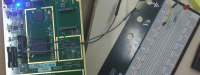
And hence I attached the '+' of LED to GPIO-4 and '-' of LED to Pin 10.
I compile my script with
g++ basic.cpp -luhd -o rx
My script works, but LED never glows.
What wrong I am doing.
You can jump to line 64 to see the GPIO stuff.
Regards
--
Sumit kumar
Doctoral Student, UPMC
Eurecom, BIOT
France

Hi Sumit,
I don't have the specifications handy, however the GPIOs are driven directly from the FPGA, and do not have a lot of output current. Most likely not enough to drive the LED. It is important not to draw too much power from the GPIOs as it could potentially damage the FPGA output.
I would recommend using a transistor in line to drive the LED from another power source. There are many guides online covering this topic.
I would also recommend to use an oscilloscope to verify that your GPIO pin is working correctly.
Regarding your code, using the 0xFF bitmask, it should turn all of the GPIOs on.
Regards,
Nate Temple
On Feb 8, 2017, at 12:32 PM, Sumit Kumar via USRP-users usrp-users@lists.ettus.com wrote:
Hello,
I have just started. Attached in my program. And "I think" it shud put all GPIO high all the time.
Ref :
[1] https://files.ettus.com/manual/page_gpio_api.html
[2] http://lists.ettus.com/pipermail/usrp-users_lists.ettus.com/2015-August/015458.html
And hence I attached the '+' of LED to GPIO-4 and '-' of LED to Pin 10.
I compile my script with
g++ basic.cpp -luhd -o rx
My script works, but LED never glows.
What wrong I am doing.
You can jump to line 64 to see the GPIO stuff.
Regards
--
Sumit kumar
Doctoral Student, UPMC
Eurecom, BIOT
France
<a.png><basic.cpp>_______________________________________________
USRP-users mailing list
USRP-users@lists.ettus.com
http://lists.ettus.com/mailman/listinfo/usrp-users_lists.ettus.com

hello Sumit,
b2xx GPIO output is 3.3V, but current is unspecified. By measuring output
current you can make sure if it's possible for your led.
you can use a transistor (that can be activated by that amount of current)
as Nate said, or use a level shifter.
best,
enes unal
9 Şub 2017 Per, 09:40 tarihinde, Nate Temple via USRP-users <
usrp-users@lists.ettus.com> şunu yazdı:
Hi Sumit,
I don't have the specifications handy, however the GPIOs are driven
directly from the FPGA, and do not have a lot of output current. Most
likely not enough to drive the LED. It is important not to draw too much
power from the GPIOs as it could potentially damage the FPGA output.
I would recommend using a transistor in line to drive the LED from another
power source. There are many guides online covering this topic.
I would also recommend to use an oscilloscope to verify that your GPIO pin
is working correctly.
Regarding your code, using the 0xFF bitmask, it should turn all of the
GPIOs on.
Regards,
Nate Temple
On Feb 8, 2017, at 12:32 PM, Sumit Kumar via USRP-users <
usrp-users@lists.ettus.com> wrote:
Hello,
I have just started. Attached in my program. And "I think" it shud put
all GPIO high all the time.
And hence I attached the '+' of LED to GPIO-4 and '-' of LED to Pin 10.
I compile my script with
g++ basic.cpp -luhd -o rx
My script works, but LED never glows.
What wrong I am doing.
You can jump to line 64 to see the GPIO stuff.
Regards
--
Sumit kumar
Doctoral Student, UPMC
Eurecom, BIOT
France
<a.png><basic.cpp>_______________________________________________
USRP-users mailing list
USRP-users@lists.ettus.com
http://lists.ettus.com/mailman/listinfo/usrp-users_lists.ettus.com
USRP-users mailing list
USRP-users@lists.ettus.com
http://lists.ettus.com/mailman/listinfo/usrp-users_lists.ettus.com
Ok, I got it. I think I will use oscilloscope then!
On Thu, Feb 9, 2017 at 8:33 AM, Enes ÜNAL aenesunal@gmail.com wrote:
hello Sumit,
b2xx GPIO output is 3.3V, but current is unspecified. By measuring output
current you can make sure if it's possible for your led.
you can use a transistor (that can be activated by that amount of current)
as Nate said, or use a level shifter.
best,
enes unal
9 Şub 2017 Per, 09:40 tarihinde, Nate Temple via USRP-users <
usrp-users@lists.ettus.com> şunu yazdı:
Hi Sumit,
I don't have the specifications handy, however the GPIOs are driven
directly from the FPGA, and do not have a lot of output current. Most
likely not enough to drive the LED. It is important not to draw too much
power from the GPIOs as it could potentially damage the FPGA output.
I would recommend using a transistor in line to drive the LED from
another power source. There are many guides online covering this topic.
I would also recommend to use an oscilloscope to verify that your GPIO
pin is working correctly.
Regarding your code, using the 0xFF bitmask, it should turn all of the
GPIOs on.
Regards,
Nate Temple
On Feb 8, 2017, at 12:32 PM, Sumit Kumar via USRP-users <
usrp-users@lists.ettus.com> wrote:
Hello,
I have just started. Attached in my program. And "I think" it shud put
all GPIO high all the time.
ettus.com/2015-August/015458.html
And hence I attached the '+' of LED to GPIO-4 and '-' of LED to Pin 10.
I compile my script with
g++ basic.cpp -luhd -o rx
My script works, but LED never glows.
What wrong I am doing.
You can jump to line 64 to see the GPIO stuff.
Regards
--
Sumit kumar
Doctoral Student, UPMC
Eurecom, BIOT
France
<a.png><basic.cpp>_______________________________________________
USRP-users mailing list
USRP-users@lists.ettus.com
http://lists.ettus.com/mailman/listinfo/usrp-users_lists.ettus.com
USRP-users mailing list
USRP-users@lists.ettus.com
http://lists.ettus.com/mailman/listinfo/usrp-users_lists.ettus.com
--
Sumit kumar
Doctoral Student, UPMC
Eurecom, BIOT
France
Hi Sumit,
Following up on this, as detailed here [1] the GPIOs are LVCMOS33 outputs with pull-ups. The strength for LVCMOS and LVTTL on Spartan 6 is 12 mA if not otherwise specified.
Regards,
Nate Temple
[1] - https://github.com/EttusResearch/fpga/blob/maint/usrp3/top/b200/gpio.ucf
On Feb 9, 2017, at 1:29 AM, Sumit Kumar cogwsn@gmail.com wrote:
Ok, I got it. I think I will use oscilloscope then!
On Thu, Feb 9, 2017 at 8:33 AM, Enes ÜNAL aenesunal@gmail.com wrote:
hello Sumit,
b2xx GPIO output is 3.3V, but current is unspecified. By measuring output current you can make sure if it's possible for your led.
you can use a transistor (that can be activated by that amount of current) as Nate said, or use a level shifter.
best,
enes unal
9 Şub 2017 Per, 09:40 tarihinde, Nate Temple via USRP-users usrp-users@lists.ettus.com şunu yazdı:
Hi Sumit,
I don't have the specifications handy, however the GPIOs are driven directly from the FPGA, and do not have a lot of output current. Most likely not enough to drive the LED. It is important not to draw too much power from the GPIOs as it could potentially damage the FPGA output.
I would recommend using a transistor in line to drive the LED from another power source. There are many guides online covering this topic.
I would also recommend to use an oscilloscope to verify that your GPIO pin is working correctly.
Regarding your code, using the 0xFF bitmask, it should turn all of the GPIOs on.
Regards,
Nate Temple
On Feb 8, 2017, at 12:32 PM, Sumit Kumar via USRP-users usrp-users@lists.ettus.com wrote:
Hello,
I have just started. Attached in my program. And "I think" it shud put all GPIO high all the time.
Ref :
[1] https://files.ettus.com/manual/page_gpio_api.html
[2] http://lists.ettus.com/pipermail/usrp-users_lists.ettus.com/2015-August/015458.html
And hence I attached the '+' of LED to GPIO-4 and '-' of LED to Pin 10.
I compile my script with
g++ basic.cpp -luhd -o rx
My script works, but LED never glows.
What wrong I am doing.
You can jump to line 64 to see the GPIO stuff.
Regards
--
Sumit kumar
Doctoral Student, UPMC
Eurecom, BIOT
France
<a.png><basic.cpp>_______________________________________________
USRP-users mailing list
USRP-users@lists.ettus.com
http://lists.ettus.com/mailman/listinfo/usrp-users_lists.ettus.com
USRP-users mailing list
USRP-users@lists.ettus.com
http://lists.ettus.com/mailman/listinfo/usrp-users_lists.ettus.com
--
Sumit kumar
Doctoral Student, UPMC
Eurecom, BIOT
France
Hi Nate,
I tried with a 3mm LED which glows up with less than 12mA. Its worked.
Thanks !
Sumit
On Thu, Feb 9, 2017 at 6:08 PM, Nate Temple nate.temple@ettus.com wrote:
Hi Sumit,
Following up on this, as detailed here [1] the GPIOs are LVCMOS33 outputs
with pull-ups. The strength for LVCMOS and LVTTL on Spartan 6 is 12 mA if
not otherwise specified.
Regards,
Nate Temple
[1] - https://github.com/EttusResearch/fpga/blob/maint/
usrp3/top/b200/gpio.ucf
On Feb 9, 2017, at 1:29 AM, Sumit Kumar cogwsn@gmail.com wrote:
Ok, I got it. I think I will use oscilloscope then!
On Thu, Feb 9, 2017 at 8:33 AM, Enes ÜNAL aenesunal@gmail.com wrote:
hello Sumit,
b2xx GPIO output is 3.3V, but current is unspecified. By measuring
output current you can make sure if it's possible for your led.
you can use a transistor (that can be activated by that amount of
current) as Nate said, or use a level shifter.
best,
enes unal
9 Şub 2017 Per, 09:40 tarihinde, Nate Temple via USRP-users <
usrp-users@lists.ettus.com> şunu yazdı:
Hi Sumit,
I don't have the specifications handy, however the GPIOs are driven
directly from the FPGA, and do not have a lot of output current. Most
likely not enough to drive the LED. It is important not to draw too much
power from the GPIOs as it could potentially damage the FPGA output.
I would recommend using a transistor in line to drive the LED from
another power source. There are many guides online covering this topic.
I would also recommend to use an oscilloscope to verify that your GPIO
pin is working correctly.
Regarding your code, using the 0xFF bitmask, it should turn all of the
GPIOs on.
Regards,
Nate Temple
On Feb 8, 2017, at 12:32 PM, Sumit Kumar via USRP-users <
usrp-users@lists.ettus.com> wrote:
Hello,
I have just started. Attached in my program. And "I think" it shud put
all GPIO high all the time.
ettus.com/2015-August/015458.html
And hence I attached the '+' of LED to GPIO-4 and '-' of LED to Pin 10.
I compile my script with
g++ basic.cpp -luhd -o rx
My script works, but LED never glows.
What wrong I am doing.
You can jump to line 64 to see the GPIO stuff.
Regards
--
Sumit kumar
Doctoral Student, UPMC
Eurecom, BIOT
France
<a.png><basic.cpp>_______________________________________________
USRP-users mailing list
USRP-users@lists.ettus.com
http://lists.ettus.com/mailman/listinfo/usrp-users_lists.ettus.com
USRP-users mailing list
USRP-users@lists.ettus.com
http://lists.ettus.com/mailman/listinfo/usrp-users_lists.ettus.com
--
Sumit kumar
Doctoral Student, UPMC
Eurecom, BIOT
France
--
Sumit kumar
Doctoral Student, UPMC
Eurecom, BIOT
France