TJ
Timothy J. Salo
Wed, Apr 10, 2024 1:19 AM
Hi,
I'm writing a "Getting Started" guide for our research group. When I
got to the GPSDO section, I had difficulty in figuring out the frequency
stability and the frequency accuracy of the B210.
At least the early versions of the B210 used a CTS Electronic Components
520L20DA40M0000 TCXO. The datasheet for this TCXO says it has a
frequency stability of +/- 2.0 ppm over an operating temperature range
of -30C - +85C.
The CTS website states that their TCXO exhibit: "Stratum 3 Performance;
±4.6ppm overall, ±0.28ppm over -40°C to +85°C". Am I correct in
concluding that this is the frequency accuracy of the TCXO used in
the B210? Does this translate directly into the frequency accuracy
of the B210?
The B210 datasheet states a frequency accuracy of +/- 2.0 ppm. Is
is a typo, and should the datasheet actually say frequency stability?
Or, did someone conclude that over a reasonable operating temperature,
the effects of temperature outweigh any inaccuracy in the frequency
of the TCXO?
Anecdotally, I have heard that one organization found that three of
their four B210s, when operating as a 5G base station, were unable
to connect with commercial off-the-shelf cellular handsets, unless
an external GPSDO was used with the B210. Does anyone have any idea
what frequency accuracy is expected by cellular handsets?
So, does anyone know what the frequency accuracy of the B210 is, in
the absence of a GPSDO? Or, should I just use the +/1 2.0 ppm figure?
Thanks,
-tjs
[1]
https://www.ctscorp.com/Files/DataSheets/Passives/FCP/TCXO/TCXO-520-datasheet.pdf
Hi,
I'm writing a "Getting Started" guide for our research group. When I
got to the GPSDO section, I had difficulty in figuring out the frequency
stability and the frequency accuracy of the B210.
At least the early versions of the B210 used a CTS Electronic Components
520L20DA40M0000 TCXO. The datasheet for this TCXO says it has a
frequency _stability_ of +/- 2.0 ppm over an operating temperature range
of -30C - +85C.
The CTS website states that their TCXO exhibit: "Stratum 3 Performance;
±4.6ppm overall, ±0.28ppm over -40°C to +85°C". Am I correct in
concluding that this is the frequency _accuracy_ of the TCXO used in
the B210? Does this translate directly into the frequency _accuracy_
of the B210?
The B210 datasheet states a frequency _accuracy_ of +/- 2.0 ppm. Is
is a typo, and should the datasheet actually say frequency _stability_?
Or, did someone conclude that over a reasonable operating temperature,
the effects of temperature outweigh any inaccuracy in the frequency
of the TCXO?
Anecdotally, I have heard that one organization found that three of
their four B210s, when operating as a 5G base station, were unable
to connect with commercial off-the-shelf cellular handsets, unless
an external GPSDO was used with the B210. Does anyone have any idea
what frequency accuracy is expected by cellular handsets?
So, does anyone know what the frequency _accuracy_ of the B210 is, in
the absence of a GPSDO? Or, should I just use the +/1 2.0 ppm figure?
Thanks,
-tjs
- - - -
[1]
https://www.ctscorp.com/Files/DataSheets/Passives/FCP/TCXO/TCXO-520-datasheet.pdf

MD
Marcus D Leech
Wed, Apr 10, 2024 1:30 AM
The frequency of any synthesized radio is directly related to accuracy and stability of the reference clock.
If the ref clock is accurate to 2PPM then the accuracy of the tuned carrier frequency will 2PPM.
Not an expert on 5G but many mobile phone systems require high frequency accuracy and stability not just in the carrier, but also in things like TDMA slot times.
Different radio systems have different requirement s in this regard which is why there are external clock inputs available on USRP and many other SDR platforms.
Sent from my iPhone
On Apr 9, 2024, at 9:20 PM, Timothy J. Salo via USRP-users usrp-users@lists.ettus.com wrote:
Hi,
I'm writing a "Getting Started" guide for our research group. When I
got to the GPSDO section, I had difficulty in figuring out the frequency
stability and the frequency accuracy of the B210.
At least the early versions of the B210 used a CTS Electronic Components
520L20DA40M0000 TCXO. The datasheet for this TCXO says it has a
frequency stability of +/- 2.0 ppm over an operating temperature range
of -30C - +85C.
The CTS website states that their TCXO exhibit: "Stratum 3 Performance;
±4.6ppm overall, ±0.28ppm over -40°C to +85°C". Am I correct in
concluding that this is the frequency accuracy of the TCXO used in
the B210? Does this translate directly into the frequency accuracy
of the B210?
The B210 datasheet states a frequency accuracy of +/- 2.0 ppm. Is
is a typo, and should the datasheet actually say frequency stability?
Or, did someone conclude that over a reasonable operating temperature,
the effects of temperature outweigh any inaccuracy in the frequency
of the TCXO?
Anecdotally, I have heard that one organization found that three of
their four B210s, when operating as a 5G base station, were unable
to connect with commercial off-the-shelf cellular handsets, unless
an external GPSDO was used with the B210. Does anyone have any idea
what frequency accuracy is expected by cellular handsets?
So, does anyone know what the frequency accuracy of the B210 is, in
the absence of a GPSDO? Or, should I just use the +/1 2.0 ppm figure?
Thanks,
-tjs
[1] https://www.ctscorp.com/Files/DataSheets/Passives/FCP/TCXO/TCXO-520-datasheet.pdf
USRP-users mailing list -- usrp-users@lists.ettus.com
To unsubscribe send an email to usrp-users-leave@lists.ettus.com
The frequency of any synthesized radio is directly related to accuracy and stability of the reference clock.
If the ref clock is accurate to 2PPM then the accuracy of the tuned carrier frequency will 2PPM.
Not an expert on 5G but many mobile phone systems require high frequency accuracy and stability not just in the carrier, but also in things like TDMA slot times.
Different radio systems have different requirement s in this regard which is why there are external clock inputs available on USRP and many other SDR platforms.
Sent from my iPhone
> On Apr 9, 2024, at 9:20 PM, Timothy J. Salo via USRP-users <usrp-users@lists.ettus.com> wrote:
>
> Hi,
>
> I'm writing a "Getting Started" guide for our research group. When I
> got to the GPSDO section, I had difficulty in figuring out the frequency
> stability and the frequency accuracy of the B210.
>
> At least the early versions of the B210 used a CTS Electronic Components
> 520L20DA40M0000 TCXO. The datasheet for this TCXO says it has a
> frequency _stability_ of +/- 2.0 ppm over an operating temperature range
> of -30C - +85C.
>
> The CTS website states that their TCXO exhibit: "Stratum 3 Performance;
> ±4.6ppm overall, ±0.28ppm over -40°C to +85°C". Am I correct in
> concluding that this is the frequency _accuracy_ of the TCXO used in
> the B210? Does this translate directly into the frequency _accuracy_
> of the B210?
>
> The B210 datasheet states a frequency _accuracy_ of +/- 2.0 ppm. Is
> is a typo, and should the datasheet actually say frequency _stability_?
> Or, did someone conclude that over a reasonable operating temperature,
> the effects of temperature outweigh any inaccuracy in the frequency
> of the TCXO?
>
> Anecdotally, I have heard that one organization found that three of
> their four B210s, when operating as a 5G base station, were unable
> to connect with commercial off-the-shelf cellular handsets, unless
> an external GPSDO was used with the B210. Does anyone have any idea
> what frequency accuracy is expected by cellular handsets?
>
> So, does anyone know what the frequency _accuracy_ of the B210 is, in
> the absence of a GPSDO? Or, should I just use the +/1 2.0 ppm figure?
>
> Thanks,
>
> -tjs
> - - - -
>
> [1] https://www.ctscorp.com/Files/DataSheets/Passives/FCP/TCXO/TCXO-520-datasheet.pdf
>
>
>
> _______________________________________________
> USRP-users mailing list -- usrp-users@lists.ettus.com
> To unsubscribe send an email to usrp-users-leave@lists.ettus.com

JA
John Ackermann N8UR
Wed, Apr 10, 2024 1:48 AM
I'm not sure about this particular unit, but typically if a crystal
oscillator datasheet lists an "accuracy" specification, that is over a
time period that takes into account the long-term frequency drift
("aging") that affects almost all oscillators. Sometimes the accuracy
is specified over a period of years, especially if the oscillator
doesn't have a frequency adjustment input. In oscillators that can be
tweaked, it might be stated as an aging rate of some value per day,
week, or month.
In inexpensive oscillators, the "stability" number usually refers to
short-term change due to temperature and other environmental factors.
In more expensive oscillators, stability is usually specified over
various averaging intervals, say from 1 second to 10K seconds.
Sometimes accuracy is also expressed as a combination of time and
temperature range, which gives the most conservative result.
John
On 4/9/24 21:19, Timothy J. Salo via USRP-users wrote:
Hi,
I'm writing a "Getting Started" guide for our research group. When I
got to the GPSDO section, I had difficulty in figuring out the frequency
stability and the frequency accuracy of the B210.
At least the early versions of the B210 used a CTS Electronic Components
520L20DA40M0000 TCXO. The datasheet for this TCXO says it has a
frequency stability of +/- 2.0 ppm over an operating temperature range
of -30C - +85C.
The CTS website states that their TCXO exhibit: "Stratum 3 Performance;
±4.6ppm overall, ±0.28ppm over -40°C to +85°C". Am I correct in
concluding that this is the frequency accuracy of the TCXO used in
the B210? Does this translate directly into the frequency accuracy
of the B210?
The B210 datasheet states a frequency accuracy of +/- 2.0 ppm. Is
is a typo, and should the datasheet actually say frequency stability?
Or, did someone conclude that over a reasonable operating temperature,
the effects of temperature outweigh any inaccuracy in the frequency
of the TCXO?
Anecdotally, I have heard that one organization found that three of
their four B210s, when operating as a 5G base station, were unable
to connect with commercial off-the-shelf cellular handsets, unless
an external GPSDO was used with the B210. Does anyone have any idea
what frequency accuracy is expected by cellular handsets?
So, does anyone know what the frequency accuracy of the B210 is, in
the absence of a GPSDO? Or, should I just use the +/1 2.0 ppm figure?
Thanks,
-tjs
[1]
https://www.ctscorp.com/Files/DataSheets/Passives/FCP/TCXO/TCXO-520-datasheet.pdf
USRP-users mailing list -- usrp-users@lists.ettus.com
To unsubscribe send an email to usrp-users-leave@lists.ettus.com
I'm not sure about this particular unit, but typically if a crystal
oscillator datasheet lists an "accuracy" specification, that is over a
time period that takes into account the long-term frequency drift
("aging") that affects almost all oscillators. Sometimes the accuracy
is specified over a period of years, especially if the oscillator
doesn't have a frequency adjustment input. In oscillators that can be
tweaked, it might be stated as an aging rate of some value per day,
week, or month.
In inexpensive oscillators, the "stability" number usually refers to
short-term change due to temperature and other environmental factors.
In more expensive oscillators, stability is usually specified over
various averaging intervals, say from 1 second to 10K seconds.
Sometimes accuracy is also expressed as a combination of time and
temperature range, which gives the most conservative result.
John
----
On 4/9/24 21:19, Timothy J. Salo via USRP-users wrote:
> Hi,
>
> I'm writing a "Getting Started" guide for our research group. When I
> got to the GPSDO section, I had difficulty in figuring out the frequency
> stability and the frequency accuracy of the B210.
>
> At least the early versions of the B210 used a CTS Electronic Components
> 520L20DA40M0000 TCXO. The datasheet for this TCXO says it has a
> frequency _stability_ of +/- 2.0 ppm over an operating temperature range
> of -30C - +85C.
>
> The CTS website states that their TCXO exhibit: "Stratum 3 Performance;
> ±4.6ppm overall, ±0.28ppm over -40°C to +85°C". Am I correct in
> concluding that this is the frequency _accuracy_ of the TCXO used in
> the B210? Does this translate directly into the frequency _accuracy_
> of the B210?
>
> The B210 datasheet states a frequency _accuracy_ of +/- 2.0 ppm. Is
> is a typo, and should the datasheet actually say frequency _stability_?
> Or, did someone conclude that over a reasonable operating temperature,
> the effects of temperature outweigh any inaccuracy in the frequency
> of the TCXO?
>
> Anecdotally, I have heard that one organization found that three of
> their four B210s, when operating as a 5G base station, were unable
> to connect with commercial off-the-shelf cellular handsets, unless
> an external GPSDO was used with the B210. Does anyone have any idea
> what frequency accuracy is expected by cellular handsets?
>
> So, does anyone know what the frequency _accuracy_ of the B210 is, in
> the absence of a GPSDO? Or, should I just use the +/1 2.0 ppm figure?
>
> Thanks,
>
> -tjs
> - - - -
>
> [1]
> https://www.ctscorp.com/Files/DataSheets/Passives/FCP/TCXO/TCXO-520-datasheet.pdf
>
>
>
> _______________________________________________
> USRP-users mailing list -- usrp-users@lists.ettus.com
> To unsubscribe send an email to usrp-users-leave@lists.ettus.com
MD
Marcus D. Leech
Wed, Apr 10, 2024 2:01 AM
On 09/04/2024 21:48, John Ackermann N8UR via USRP-users wrote:
I'm not sure about this particular unit, but typically if a crystal
oscillator datasheet lists an "accuracy" specification, that is over a
time period that takes into account the long-term frequency drift
("aging") that affects almost all oscillators. Sometimes the accuracy
is specified over a period of years, especially if the oscillator
doesn't have a frequency adjustment input. In oscillators that can be
tweaked, it might be stated as an aging rate of some value per day,
week, or month.
In inexpensive oscillators, the "stability" number usually refers to
short-term change due to temperature and other environmental factors.
In more expensive oscillators, stability is usually specified over
various averaging intervals, say from 1 second to 10K seconds.
Sometimes accuracy is also expressed as a combination of time and
temperature range, which gives the most conservative result.
John
See also Allen Deviation plots....
On 4/9/24 21:19, Timothy J. Salo via USRP-users wrote:
Hi,
I'm writing a "Getting Started" guide for our research group. When I
got to the GPSDO section, I had difficulty in figuring out the frequency
stability and the frequency accuracy of the B210.
At least the early versions of the B210 used a CTS Electronic Components
520L20DA40M0000 TCXO. The datasheet for this TCXO says it has a
frequency stability of +/- 2.0 ppm over an operating temperature range
of -30C - +85C.
The CTS website states that their TCXO exhibit: "Stratum 3 Performance;
±4.6ppm overall, ±0.28ppm over -40°C to +85°C". Am I correct in
concluding that this is the frequency accuracy of the TCXO used in
the B210? Does this translate directly into the frequency accuracy
of the B210?
The B210 datasheet states a frequency accuracy of +/- 2.0 ppm. Is
is a typo, and should the datasheet actually say frequency stability?
Or, did someone conclude that over a reasonable operating temperature,
the effects of temperature outweigh any inaccuracy in the frequency
of the TCXO?
Anecdotally, I have heard that one organization found that three of
their four B210s, when operating as a 5G base station, were unable
to connect with commercial off-the-shelf cellular handsets, unless
an external GPSDO was used with the B210. Does anyone have any idea
what frequency accuracy is expected by cellular handsets?
So, does anyone know what the frequency accuracy of the B210 is, in
the absence of a GPSDO? Or, should I just use the +/1 2.0 ppm figure?
Thanks,
-tjs
[1]
https://www.ctscorp.com/Files/DataSheets/Passives/FCP/TCXO/TCXO-520-datasheet.pdf
USRP-users mailing list -- usrp-users@lists.ettus.com
To unsubscribe send an email to usrp-users-leave@lists.ettus.com
On 09/04/2024 21:48, John Ackermann N8UR via USRP-users wrote:
> I'm not sure about this particular unit, but typically if a crystal
> oscillator datasheet lists an "accuracy" specification, that is over a
> time period that takes into account the long-term frequency drift
> ("aging") that affects almost all oscillators. Sometimes the accuracy
> is specified over a period of years, especially if the oscillator
> doesn't have a frequency adjustment input. In oscillators that can be
> tweaked, it might be stated as an aging rate of some value per day,
> week, or month.
>
> In inexpensive oscillators, the "stability" number usually refers to
> short-term change due to temperature and other environmental factors.
> In more expensive oscillators, stability is usually specified over
> various averaging intervals, say from 1 second to 10K seconds.
>
> Sometimes accuracy is also expressed as a combination of time and
> temperature range, which gives the most conservative result.
>
> John
> ----
See also Allen Deviation plots....
>
> On 4/9/24 21:19, Timothy J. Salo via USRP-users wrote:
>> Hi,
>>
>> I'm writing a "Getting Started" guide for our research group. When I
>> got to the GPSDO section, I had difficulty in figuring out the frequency
>> stability and the frequency accuracy of the B210.
>>
>> At least the early versions of the B210 used a CTS Electronic Components
>> 520L20DA40M0000 TCXO. The datasheet for this TCXO says it has a
>> frequency _stability_ of +/- 2.0 ppm over an operating temperature range
>> of -30C - +85C.
>>
>> The CTS website states that their TCXO exhibit: "Stratum 3 Performance;
>> ±4.6ppm overall, ±0.28ppm over -40°C to +85°C". Am I correct in
>> concluding that this is the frequency _accuracy_ of the TCXO used in
>> the B210? Does this translate directly into the frequency _accuracy_
>> of the B210?
>>
>> The B210 datasheet states a frequency _accuracy_ of +/- 2.0 ppm. Is
>> is a typo, and should the datasheet actually say frequency _stability_?
>> Or, did someone conclude that over a reasonable operating temperature,
>> the effects of temperature outweigh any inaccuracy in the frequency
>> of the TCXO?
>>
>> Anecdotally, I have heard that one organization found that three of
>> their four B210s, when operating as a 5G base station, were unable
>> to connect with commercial off-the-shelf cellular handsets, unless
>> an external GPSDO was used with the B210. Does anyone have any idea
>> what frequency accuracy is expected by cellular handsets?
>>
>> So, does anyone know what the frequency _accuracy_ of the B210 is, in
>> the absence of a GPSDO? Or, should I just use the +/1 2.0 ppm figure?
>>
>> Thanks,
>>
>> -tjs
>> - - - -
>>
>> [1]
>> https://www.ctscorp.com/Files/DataSheets/Passives/FCP/TCXO/TCXO-520-datasheet.pdf
>>
>>
>>
>> _______________________________________________
>> USRP-users mailing list -- usrp-users@lists.ettus.com
>> To unsubscribe send an email to usrp-users-leave@lists.ettus.com
> _______________________________________________
> USRP-users mailing list -- usrp-users@lists.ettus.com
> To unsubscribe send an email to usrp-users-leave@lists.ettus.com

D
drtaylor@manx.net
Wed, Apr 10, 2024 10:57 AM
Dear all,
I would be very cautious attempting to derive the frequency accuracy of a piece of equipment against its master oscillator specification, as any function subservient to its nominal frequency and temperature drift over time specification will vary across product.
For information I have a B200 and B210 which after 30 minutes or more of warm up will generate RF carriers around 2.4 GHz with up +/- 10 KHz difference unless externally 10 MHz stabilised. This concurs with other comments.
Best regards,
David GD4FMB
On ,Wed Apr 10 2024 03:01:30 GMT+0100 (British Summer Time), Marcus D.
Leech patchvonbraun@gmail.com wrote:
---------- Original Message ----------
On 09/04/2024 21:48, John Ackermann N8UR via USRP-users wrote:
sure about this particular unit, but typically if a crystal
datasheet lists an "accuracy" specification, that is over a
that takes into account the long-term frequency drift
affects almost all oscillators. Sometimes the accuracy
over a period of years, especially if the oscillator
frequency adjustment input. In oscillators that can be
might be stated as an aging rate of some value per day,
week, or month.
In inexpensive oscillators, the "stability" number usually refers to
short-term change due to temperature and other environmental factors.
In more expensive oscillators, stability is usually specified over
various averaging intervals, say from 1 second to 10K seconds.
Sometimes accuracy is also expressed as a combination of time and
temperature range, which gives the most conservative result.
See also Allen Deviation plots....
On 4/9/24 21:19, Timothy J.
Salo via USRP-users wrote:
Hi,
I'm writing a "Getting Started"
guide for our research group. When I
got to the GPSDO section, I had
difficulty in figuring out the frequency
stability and the frequency
At least the early versions of the B210 used a
CTS Electronic Components
520L20DA40M0000 TCXO. The datasheet for this
frequency stability of +/- 2.0 ppm over an
operating temperature range
of -30C - +85C.
The CTS website
states that their TCXO exhibit: "Stratum 3 Performance;
overall, ±0.28ppm over -40°C to +85°C". Am I correct in
that this is the frequency accuracy of the TCXO used in
Does this translate directly into the frequency accuracy
of the B210?
The B210 datasheet states a frequency accuracy of +/- 2.0 ppm. Is
is a typo, and should the datasheet actually say frequency stability?
Or, did someone conclude that over a reasonable operating temperature,
the effects of temperature outweigh any inaccuracy in the frequency
Anecdotally, I have heard that one organization found
their four B210s, when operating as a 5G base station,
to connect with commercial off-the-shelf cellular handsets,
an external GPSDO was used with the B210. Does anyone have any
what frequency accuracy is expected by cellular handsets?
So, does anyone know what the frequency accuracy of the B210 is, in
the absence of a GPSDO? Or, should I just use the +/1 2.0 ppm figure?
To unsubscribe send an email
To unsubscribe send an email to
Dear all,
I would be very cautious attempting to derive the frequency accuracy of a piece of equipment against its master oscillator specification, as any function subservient to its nominal frequency and temperature drift over time specification will vary across product.
For information I have a B200 and B210 which after 30 minutes or more of warm up will generate RF carriers around 2.4 GHz with up +/- 10 KHz difference unless externally 10 MHz stabilised. This concurs with other comments.
Best regards,
David GD4FMB
>
> On ,Wed Apr 10 2024 03:01:30 GMT+0100 (British Summer Time), Marcus D.
> Leech <patchvonbraun@gmail.com> wrote:
>
> ---------- Original Message ----------
>
> On 09/04/2024 21:48, John Ackermann N8UR via USRP-users wrote:
> > I'm not
> sure about this particular unit, but typically if a crystal
> > oscillator
> datasheet lists an "accuracy" specification, that is over a
> > time period
> that takes into account the long-term frequency drift
> > ("aging") that
> affects almost all oscillators. Sometimes the accuracy
> > is specified
> over a period of years, especially if the oscillator
> > doesn't have a
> frequency adjustment input. In oscillators that can be
> > tweaked, it
> might be stated as an aging rate of some value per day,
> > week, or month.
> >
> > In inexpensive oscillators, the "stability" number usually refers to
> > short-term change due to temperature and other environmental factors.
> >
> In more expensive oscillators, stability is usually specified over
> >
> various averaging intervals, say from 1 second to 10K seconds.
> >
> >
> Sometimes accuracy is also expressed as a combination of time and
> >
> temperature range, which gives the most conservative result.
> >
> > John
> >
> ----
> See also Allen Deviation plots....
>
>
> >
> > On 4/9/24 21:19, Timothy J.
> Salo via USRP-users wrote:
> >> Hi,
> >>
> >> I'm writing a "Getting Started"
> guide for our research group. When I
> >> got to the GPSDO section, I had
> difficulty in figuring out the frequency
> >> stability and the frequency
> accuracy of the B210.
> >>
> >> At least the early versions of the B210 used a
> CTS Electronic Components
> >> 520L20DA40M0000 TCXO. The datasheet for this
> TCXO says it has a
> >> frequency _stability_ of +/- 2.0 ppm over an
> operating temperature range
> >> of -30C - +85C.
> >>
> >> The CTS website
> states that their TCXO exhibit: "Stratum 3 Performance;
> >> ±4.6ppm
> overall, ±0.28ppm over -40°C to +85°C". Am I correct in
> >> concluding
> that this is the frequency _accuracy_ of the TCXO used in
> >> the B210?
> Does this translate directly into the frequency _accuracy_
> >> of the B210?
> >>
> >> The B210 datasheet states a frequency _accuracy_ of +/- 2.0 ppm. Is
> >> is a typo, and should the datasheet actually say frequency _stability_?
> >> Or, did someone conclude that over a reasonable operating temperature,
> >> the effects of temperature outweigh any inaccuracy in the frequency
> >>
> of the TCXO?
> >>
> >> Anecdotally, I have heard that one organization found
> that three of
> >> their four B210s, when operating as a 5G base station,
> were unable
> >> to connect with commercial off-the-shelf cellular handsets,
> unless
> >> an external GPSDO was used with the B210. Does anyone have any
> idea
> >> what frequency accuracy is expected by cellular handsets?
> >>
> >>
> So, does anyone know what the frequency _accuracy_ of the B210 is, in
> >>
> the absence of a GPSDO? Or, should I just use the +/1 2.0 ppm figure?
> >>
> >> Thanks,
> >>
> >> -tjs
> >> - - - -
> >>
> >> [1]
> >>
> https://www.ctscorp.com/Files/DataSheets/Passives/FCP/TCXO/TCXO-520-datasheet.pdf
> >>
> >>
> >>
> >> _______________________________________________
> >> USRP-users
> mailing list -- usrp-users@lists.ettus.com
> >> To unsubscribe send an email
> to usrp-users-leave@lists.ettus.com
> >
> _______________________________________________
> > USRP-users mailing list
> -- usrp-users@lists.ettus.com
> > To unsubscribe send an email to
> usrp-users-leave@lists.ettus.com
> _______________________________________________
> USRP-users mailing list --
> usrp-users@lists.ettus.com
> To unsubscribe send an email to
> usrp-users-leave@lists.ettus.com
>
>
MD
Marcus D. Leech
Wed, Apr 10, 2024 1:24 PM
Dear all,
I would be very cautious attempting to derive the frequency accuracy
of a piece of equipment against its master oscillator specification,
as any function subservient to its nominal frequency and temperature
drift over time specification will vary across product.
For information I have a B200 and B210 which after 30 minutes or more
of warm up will generate RF carriers around 2.4 GHz with up +/- 10 KHz
difference unless externally 10 MHz stabilised. This concurs with
other comments.
Best regards,
David GD4FMB
10kHz for a 2.4GHz carrier is more than you would expect from a 2PPM
master oscillator. The fact that it gets better with
a better external oscillator suggests that there's an issue with the
on-board master oscillator TCXO, and not some weirdness
in PLL synthesizer settings, for example.
 On ,Wed Apr 10 2024 03:01:30 GMT+0100 (British Summer Time),
 Marcus D. Leech <patchvonbraun@gmail.com> wrote:
 ---------- Original Message ----------

 On 09/04/2024 21:48, John Ackermann N8UR via USRP-users wrote:
I'm not sure about this particular unit, but typically if a crystal
oscillator datasheet lists an "accuracy" specification, that is over a
time period that takes into account the long-term frequency drift
("aging") that affects almost all oscillators. Sometimes the accuracy
is specified over a period of years, especially if the oscillator
doesn't have a frequency adjustment input. In oscillators that can be
tweaked, it might be stated as an aging rate of some value per day,
week, or month.
In inexpensive oscillators, the "stability" number usually refers to
short-term change due to temperature and other environmental factors.
In more expensive oscillators, stability is usually specified over
various averaging intervals, say from 1 second to 10K seconds.
Sometimes accuracy is also expressed as a combination of time and
temperature range, which gives the most conservative result.
John
See also Allen Deviation plots....
On 4/9/24 21:19, Timothy J. Salo via USRP-users wrote:
Hi,
I'm writing a "Getting Started" guide for our research group. When I
got to the GPSDO section, I had difficulty in figuring out the frequency
stability and the frequency accuracy of the B210.
At least the early versions of the B210 used a CTS Electronic Components
520L20DA40M0000 TCXO. The datasheet for this TCXO says it has a
frequency stability of +/- 2.0 ppm over an operating temperature range
of -30C - +85C.
The CTS website states that their TCXO exhibit: "Stratum 3 Performance;
±4.6ppm overall, ±0.28ppm over -40°C to +85°C". Am I correct in
concluding that this is the frequency accuracy of the TCXO used in
the B210? Does this translate directly into the frequency accuracy
of the B210?
The B210 datasheet states a frequency accuracy of +/- 2.0 ppm. Is
is a typo, and should the datasheet actually say frequency stability?
Or, did someone conclude that over a reasonable operating temperature,
the effects of temperature outweigh any inaccuracy in the frequency
of the TCXO?
Anecdotally, I have heard that one organization found that three of
their four B210s, when operating as a 5G base station, were unable
to connect with commercial off-the-shelf cellular handsets, unless
an external GPSDO was used with the B210. Does anyone have any idea
what frequency accuracy is expected by cellular handsets?
So, does anyone know what the frequency accuracy of the B210 is, in
the absence of a GPSDO? Or, should I just use the +/1 2.0 ppm figure?
Thanks,
-tjs
[1]
https://www.ctscorp.com/Files/DataSheets/Passives/FCP/TCXO/TCXO-520-datasheet.pdf
USRP-users mailing list -- usrp-users@lists.ettus.com
To unsubscribe send an email to usrp-users-leave@lists.ettus.com
 _______________________________________________
 USRP-users mailing list --usrp-users@lists.ettus.com
 To unsubscribe send an email tousrp-users-leave@lists.ettus.com
On 10/04/2024 06:57, drtaylor@manx.net wrote:
> Dear all,
> I would be very cautious attempting to derive the frequency accuracy
> of a piece of equipment against its master oscillator specification,
> as any function subservient to its nominal frequency and temperature
> drift over time specification will vary across product.
> For information I have a B200 and B210 which after 30 minutes or more
> of warm up will generate RF carriers around 2.4 GHz with up +/- 10 KHz
> difference unless externally 10 MHz stabilised. This concurs with
> other comments.
>
> Best regards,
> David GD4FMB
10kHz for a 2.4GHz carrier is more than you would expect from a 2PPM
master oscillator. The fact that it gets better with
a better external oscillator suggests that there's an issue with the
on-board master oscillator TCXO, and not some weirdness
in PLL synthesizer settings, for example.
>
>
>
> On ,Wed Apr 10 2024 03:01:30 GMT+0100 (British Summer Time),
> Marcus D. Leech <patchvonbraun@gmail.com> wrote:
> ---------- Original Message ----------
>
> On 09/04/2024 21:48, John Ackermann N8UR via USRP-users wrote:
> > I'm not sure about this particular unit, but typically if a crystal
> > oscillator datasheet lists an "accuracy" specification, that is over a
> > time period that takes into account the long-term frequency drift
> > ("aging") that affects almost all oscillators. Sometimes the accuracy
> > is specified over a period of years, especially if the oscillator
> > doesn't have a frequency adjustment input. In oscillators that can be
> > tweaked, it might be stated as an aging rate of some value per day,
> > week, or month.
> >
> > In inexpensive oscillators, the "stability" number usually refers to
> > short-term change due to temperature and other environmental factors.
> > In more expensive oscillators, stability is usually specified over
> > various averaging intervals, say from 1 second to 10K seconds.
> >
> > Sometimes accuracy is also expressed as a combination of time and
> > temperature range, which gives the most conservative result.
> >
> > John
> > ----
> See also Allen Deviation plots....
>
>
> >
> > On 4/9/24 21:19, Timothy J. Salo via USRP-users wrote:
> >> Hi,
> >>
> >> I'm writing a "Getting Started" guide for our research group. When I
> >> got to the GPSDO section, I had difficulty in figuring out the frequency
> >> stability and the frequency accuracy of the B210.
> >>
> >> At least the early versions of the B210 used a CTS Electronic Components
> >> 520L20DA40M0000 TCXO. The datasheet for this TCXO says it has a
> >> frequency _stability_ of +/- 2.0 ppm over an operating temperature range
> >> of -30C - +85C.
> >>
> >> The CTS website states that their TCXO exhibit: "Stratum 3 Performance;
> >> ±4.6ppm overall, ±0.28ppm over -40°C to +85°C". Am I correct in
> >> concluding that this is the frequency _accuracy_ of the TCXO used in
> >> the B210? Does this translate directly into the frequency _accuracy_
> >> of the B210?
> >>
> >> The B210 datasheet states a frequency _accuracy_ of +/- 2.0 ppm. Is
> >> is a typo, and should the datasheet actually say frequency _stability_?
> >> Or, did someone conclude that over a reasonable operating temperature,
> >> the effects of temperature outweigh any inaccuracy in the frequency
> >> of the TCXO?
> >>
> >> Anecdotally, I have heard that one organization found that three of
> >> their four B210s, when operating as a 5G base station, were unable
> >> to connect with commercial off-the-shelf cellular handsets, unless
> >> an external GPSDO was used with the B210. Does anyone have any idea
> >> what frequency accuracy is expected by cellular handsets?
> >>
> >> So, does anyone know what the frequency _accuracy_ of the B210 is, in
> >> the absence of a GPSDO? Or, should I just use the +/1 2.0 ppm figure?
> >>
> >> Thanks,
> >>
> >> -tjs
> >> - - - -
> >>
> >> [1]
> >> https://www.ctscorp.com/Files/DataSheets/Passives/FCP/TCXO/TCXO-520-datasheet.pdf
> >>
> >>
> >>
> >> _______________________________________________
> >> USRP-users mailing list -- usrp-users@lists.ettus.com
> >> To unsubscribe send an email to usrp-users-leave@lists.ettus.com
> > _______________________________________________
> > USRP-users mailing list -- usrp-users@lists.ettus.com
> > To unsubscribe send an email to usrp-users-leave@lists.ettus.com
> _______________________________________________
> USRP-users mailing list --usrp-users@lists.ettus.com
> To unsubscribe send an email tousrp-users-leave@lists.ettus.com
>
>

Z
zhou
Thu, Apr 18, 2024 5:54 AM
Hi All,
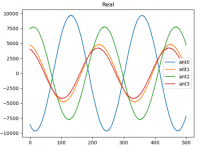
I am using X410 with UHD 4.5. There are 4 Tx and 4 Rx in this unit. I am checking the RF signal by using loopback connection, that is, Tx is connected to Rx in the same USRP. .
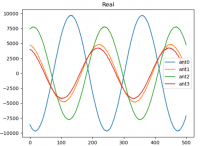
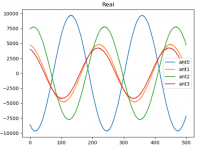
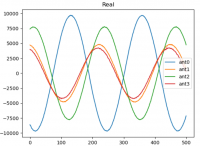
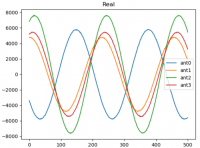
The same single tone signal is transmitted on all 4 Tx antennas, but I find that the received power levels are significantly different among antennas as shown in plot below. There are two ZBX daughterboards in X410; ant0 and ant1 in the 1st board and ant2 and ant3 in the 2nd. It seems that in the same daughterboard, power in the 1st antenna is higher than the 2nd antenna.
The carrier frequency is 7GHz. Sampling rate 491.52MHz. In every test, UHD does self calibration for each channel.Apart from power difference, there is also phase difference between antennas.
How to make tx power closer between antennas?And, is there a way to adjust the carrier phase for individual antenna?
Thanks for any suggestion.
Kind regards,Hongwei
Hi All,
I am using X410 with UHD 4.5. There are 4 Tx and 4 Rx in this unit. I am checking the RF signal by using loopback connection, that is, Tx is connected to Rx in the same USRP. .
The same single tone signal is transmitted on all 4 Tx antennas, but I find that the received power levels are significantly different among antennas as shown in plot below. There are two ZBX daughterboards in X410; ant0 and ant1 in the 1st board and ant2 and ant3 in the 2nd. It seems that in the same daughterboard, power in the 1st antenna is higher than the 2nd antenna.
The carrier frequency is 7GHz. Sampling rate 491.52MHz. In every test, UHD does self calibration for each channel.Apart from power difference, there is also phase difference between antennas.
How to make tx power closer between antennas?And, is there a way to adjust the carrier phase for individual antenna?
Thanks for any suggestion.
Kind regards,Hongwei

DD
Disco Daniele
Thu, Apr 18, 2024 6:00 AM
7GHz is valid carrier frequency? Make the same experiment @1GHz and @3GHz. The results are the same?
Gruppo TIM - Uso Interno - Tutti i diritti riservati.
Da: zhou via USRP-users usrp-users@lists.ettus.com
Inviato: giovedì 18 aprile 2024 07:55
A: usrp-users@lists.ettus.com
Oggetto: [EXT] [USRP-users] Unbalanced power among antennas in X410
Hi All,
I am using X410 with UHD 4.5. There are 4 Tx and 4 Rx in this unit. I am checking the RF signal by using loopback connection, that is, Tx is connected to Rx in the same USRP. .
The same single tone signal is transmitted on all 4 Tx antennas, but I find that the received power levels are significantly different among antennas as shown in plot below. There are two ZBX daughterboards in X410; ant0 and ant1 in the 1st board and ant2 and ant3 in the 2nd. It seems that in the same daughterboard, power in the 1st antenna is higher than the 2nd antenna.
The carrier frequency is 7GHz. Sampling rate 491.52MHz. In every test, UHD does self calibration for each channel.
Apart from power difference, there is also phase difference between antennas.
How to make tx power closer between antennas?
And, is there a way to adjust the carrier phase for individual antenna?
[Inline image]
Thanks for any suggestion.
Kind regards,
Hongwei
Questo messaggio e i suoi allegati sono indirizzati esclusivamente alle persone indicate. La diffusione, copia o qualsiasi altra azione derivante dalla conoscenza di queste informazioni sono rigorosamente vietate. Qualora abbiate ricevuto questo documento per errore siete cortesemente pregati di darne immediata comunicazione al mittente e di provvedere alla sua distruzione, Grazie.
This e-mail and any attachments is confidential and may contain privileged information intended for the addressee(s) only. Dissemination, copying, printing or use by anybody else is unauthorised. If you are not the intended recipient, please delete this message and any attachments and advise the sender by return e-mail, Thanks.
Rispetta l'ambiente. Non stampare questa mail se non è necessario.
7GHz is valid carrier frequency? Make the same experiment @1GHz and @3GHz. The results are the same?
Gruppo TIM - Uso Interno - Tutti i diritti riservati.
Da: zhou via USRP-users <usrp-users@lists.ettus.com>
Inviato: giovedì 18 aprile 2024 07:55
A: usrp-users@lists.ettus.com
Oggetto: [EXT] [USRP-users] Unbalanced power among antennas in X410
Hi All,
I am using X410 with UHD 4.5. There are 4 Tx and 4 Rx in this unit. I am checking the RF signal by using loopback connection, that is, Tx is connected to Rx in the same USRP. .
The same single tone signal is transmitted on all 4 Tx antennas, but I find that the received power levels are significantly different among antennas as shown in plot below. There are two ZBX daughterboards in X410; ant0 and ant1 in the 1st board and ant2 and ant3 in the 2nd. It seems that in the same daughterboard, power in the 1st antenna is higher than the 2nd antenna.
The carrier frequency is 7GHz. Sampling rate 491.52MHz. In every test, UHD does self calibration for each channel.
Apart from power difference, there is also phase difference between antennas.
How to make tx power closer between antennas?
And, is there a way to adjust the carrier phase for individual antenna?
[Inline image]
Thanks for any suggestion.
Kind regards,
Hongwei
Questo messaggio e i suoi allegati sono indirizzati esclusivamente alle persone indicate. La diffusione, copia o qualsiasi altra azione derivante dalla conoscenza di queste informazioni sono rigorosamente vietate. Qualora abbiate ricevuto questo documento per errore siete cortesemente pregati di darne immediata comunicazione al mittente e di provvedere alla sua distruzione, Grazie.
This e-mail and any attachments is confidential and may contain privileged information intended for the addressee(s) only. Dissemination, copying, printing or use by anybody else is unauthorised. If you are not the intended recipient, please delete this message and any attachments and advise the sender by return e-mail, Thanks.
Rispetta l'ambiente. Non stampare questa mail se non è necessario.
Z
zhou
Thu, Apr 18, 2024 6:44 AM
Hi Disco,
Thanks for your quick response. Yes, 7GHz is valid in X410 which has wide range from 1MHz to 7.2GHz, and it can actually go up to 8GHz.
I also tested at 3GHz. Power is different as well, but less different than 7GHz.
Kind regards,H..
On Thursday, 18 April 2024 at 07:00:47 BST, Disco Daniele <daniele.disco@telecomitalia.it> wrote:
7GHz is valid carrier frequency? Make the same experiment @1GHz and @3GHz. The results are the same?
Gruppo TIM - Uso Interno - Tutti i diritti riservati.
Da: zhou via USRP-users usrp-users@lists.ettus.com
Inviato: giovedì 18 aprile 2024 07:55
A: usrp-users@lists.ettus.com
Oggetto: [EXT] [USRP-users] Unbalanced power among antennas in X410
Hi All,
I am using X410 with UHD 4.5. There are 4 Tx and 4 Rx in this unit. I am checking the RF signal by using loopback connection, that is, Tx is connected to Rx in the same USRP. .
The same single tone signal is transmitted on all 4 Tx antennas, but I find that the received power levels are significantly different among antennas as shown in plot below. There are two ZBX daughterboards in X410; ant0 and ant1 in the 1st board and ant2 and ant3 in the 2nd. It seems that in the same daughterboard, power in the 1st antenna is higher than the 2nd antenna.
The carrier frequency is 7GHz. Sampling rate 491.52MHz. In every test, UHD does self calibration for each channel.
Apart from power difference, there is also phase difference between antennas.
How to make tx power closer between antennas?
And, is there a way to adjust the carrier phase for individual antenna?
Thanks for any suggestion.
Kind regards,
Hongwei
|
Questo messaggio e i suoi allegati sono indirizzati esclusivamente alle persone indicate. La diffusione, copia o qualsiasi altra azione derivante dalla conoscenza di queste informazioni sono rigorosamente vietate. Qualora abbiate ricevuto questo documento per errore siete cortesemente pregati di darne immediata comunicazione al mittente e di provvedere alla sua distruzione, Grazie.
This e-mail and any attachments is confidential and may contain privileged information intended for the addressee(s) only. Dissemination, copying, printing or use by anybody else is unauthorised. If you are not the intended recipient, please delete this message and any attachments and advise the sender by return e-mail, Thanks.
Rispetta l'ambiente. Non stampare questa mail se non è necessario.
|
Hi Disco,
Thanks for your quick response. Yes, 7GHz is valid in X410 which has wide range from 1MHz to 7.2GHz, and it can actually go up to 8GHz.
I also tested at 3GHz. Power is different as well, but less different than 7GHz.
Kind regards,H..
On Thursday, 18 April 2024 at 07:00:47 BST, Disco Daniele <daniele.disco@telecomitalia.it> wrote:
7GHz is valid carrier frequency? Make the same experiment @1GHz and @3GHz. The results are the same?
Gruppo TIM - Uso Interno - Tutti i diritti riservati.
Da: zhou via USRP-users <usrp-users@lists.ettus.com>
Inviato: giovedì 18 aprile 2024 07:55
A: usrp-users@lists.ettus.com
Oggetto: [EXT] [USRP-users] Unbalanced power among antennas in X410
Hi All,
I am using X410 with UHD 4.5. There are 4 Tx and 4 Rx in this unit. I am checking the RF signal by using loopback connection, that is, Tx is connected to Rx in the same USRP. .
The same single tone signal is transmitted on all 4 Tx antennas, but I find that the received power levels are significantly different among antennas as shown in plot below. There are two ZBX daughterboards in X410; ant0 and ant1 in the 1st board and ant2 and ant3 in the 2nd. It seems that in the same daughterboard, power in the 1st antenna is higher than the 2nd antenna.
The carrier frequency is 7GHz. Sampling rate 491.52MHz. In every test, UHD does self calibration for each channel.
Apart from power difference, there is also phase difference between antennas.
How to make tx power closer between antennas?
And, is there a way to adjust the carrier phase for individual antenna?
Thanks for any suggestion.
Kind regards,
Hongwei
|
Questo messaggio e i suoi allegati sono indirizzati esclusivamente alle persone indicate. La diffusione, copia o qualsiasi altra azione derivante dalla conoscenza di queste informazioni sono rigorosamente vietate. Qualora abbiate ricevuto questo documento per errore siete cortesemente pregati di darne immediata comunicazione al mittente e di provvedere alla sua distruzione, Grazie.
This e-mail and any attachments is confidential and may contain privileged information intended for the addressee(s) only. Dissemination, copying, printing or use by anybody else is unauthorised. If you are not the intended recipient, please delete this message and any attachments and advise the sender by return e-mail, Thanks.
Rispetta l'ambiente. Non stampare questa mail se non è necessario.
|

MA
Martin Anderseck
Thu, Apr 18, 2024 1:00 PM
You mention that self-calibration for each channel is running. Please don’t get wrong what this calibration is doing. This ADC self-cal is only responsible for reducing unwanted spurs in the ADCs as described here: https://files.ettus.com/manual/page_usrp_x4xx.html#x4xx_adc_self_cal
This ADC self-cal, however, will not handle any power differences. From what you write it’s not possible to get absolute power values, so the relative differences are impossible to get, too. Since those devices are SDRs and not dedicated measurement equipment it is expected that there may be differences (not huge ones though, please see the specs for getting an impression in figures 2 and 4: https://www.ni.com/docs/de-DE/bundle/ettus-usrp-x410-specs/page/specs.html). If the existing accuracy is insufficient, it is possible to use the power API: https://files.ettus.com/manual/page_zbx.html#zbx_pwr_cal
You mention you used a loopback connection. Does that mean that you connected cables to the front panel connectors for this? To exclude them from the issue you might try using the internal loopback “antenna” for both the RX and TX path (see get_rx_antennas() for a list of antennas). This will use the internal loopback that is on the daughterboard for each channel. When using the internal loopback ensure you have compensated the lack of the 30 dB attenuator (e.g. by reducing the gain on the TX side) as typically in an external loopback you would use 30 dB attenuation (https://kb.ettus.com/USRP_X410/X440_Getting_Started_Guide#Proper_Care_and_Handling).
For the phase difference: You don’t mention how you start the signal generation. I guess timed commands are what you’re missing: https://kb.ettus.com/Synchronizing_USRP_Events_Using_Timed_Commands_in_UHD
I hope that gets you a bit further.
Best regards,
Martin
From: zhou via USRP-users usrp-users@lists.ettus.com
Sent: Thursday, April 18, 2024 7:55 AM
To: usrp-users@lists.ettus.com
Subject: [USRP-users] Unbalanced power among antennas in X410
Hi All,
I am using X410 with UHD 4.5. There are 4 Tx and 4 Rx in this unit. I am checking the RF signal by using loopback connection, that is, Tx is connected to Rx in the same USRP. .
The same single tone signal is transmitted on all 4 Tx antennas, but I find that the received power levels are significantly different among antennas as shown in plot below. There are two ZBX daughterboards in X410; ant0 and ant1 in the 1st board and ant2 and ant3 in the 2nd. It seems that in the same daughterboard, power in the 1st antenna is higher than the 2nd antenna.
The carrier frequency is 7GHz. Sampling rate 491.52MHz. In every test, UHD does self calibration for each channel.
Apart from power difference, there is also phase difference between antennas.
How to make tx power closer between antennas?
And, is there a way to adjust the carrier phase for individual antenna?
[Inline image]
Thanks for any suggestion.
Kind regards,
Hongwei
National Instruments Dresden GmbH; Geschäftsführer (Managing Directors): John Stanton McElroy, Albert Edward Percival III, Kathleen Spurck; Sitz (Registered Office): Dresden; HRB (Commercial Register No.): 22081; Registergericht (Registration Court): Dresden
This email and any attachments are intended only for the person to whom this email is addressed and may contain confidential and/or privileged information. If you received this email in error, please do not disclose the contents to anyone, but notify the sender by return email and delete this email (and any attachments) from your system.
You mention that self-calibration for each channel is running. Please don’t get wrong what this calibration is doing. This ADC self-cal is only responsible for reducing unwanted spurs in the ADCs as described here: https://files.ettus.com/manual/page_usrp_x4xx.html#x4xx_adc_self_cal
This ADC self-cal, however, will not handle any power differences. From what you write it’s not possible to get absolute power values, so the relative differences are impossible to get, too. Since those devices are SDRs and not dedicated measurement equipment it is expected that there may be differences (not huge ones though, please see the specs for getting an impression in figures 2 and 4: https://www.ni.com/docs/de-DE/bundle/ettus-usrp-x410-specs/page/specs.html). If the existing accuracy is insufficient, it is possible to use the power API: https://files.ettus.com/manual/page_zbx.html#zbx_pwr_cal
You mention you used a loopback connection. Does that mean that you connected cables to the front panel connectors for this? To exclude them from the issue you might try using the internal loopback “antenna” for both the RX and TX path (see get_rx_antennas() for a list of antennas). This will use the internal loopback that is on the daughterboard for each channel. When using the internal loopback ensure you have compensated the lack of the 30 dB attenuator (e.g. by reducing the gain on the TX side) as typically in an external loopback you would use 30 dB attenuation (https://kb.ettus.com/USRP_X410/X440_Getting_Started_Guide#Proper_Care_and_Handling).
For the phase difference: You don’t mention how you start the signal generation. I guess timed commands are what you’re missing: https://kb.ettus.com/Synchronizing_USRP_Events_Using_Timed_Commands_in_UHD
I hope that gets you a bit further.
Best regards,
Martin
From: zhou via USRP-users <usrp-users@lists.ettus.com>
Sent: Thursday, April 18, 2024 7:55 AM
To: usrp-users@lists.ettus.com
Subject: [USRP-users] Unbalanced power among antennas in X410
Hi All,
I am using X410 with UHD 4.5. There are 4 Tx and 4 Rx in this unit. I am checking the RF signal by using loopback connection, that is, Tx is connected to Rx in the same USRP. .
The same single tone signal is transmitted on all 4 Tx antennas, but I find that the received power levels are significantly different among antennas as shown in plot below. There are two ZBX daughterboards in X410; ant0 and ant1 in the 1st board and ant2 and ant3 in the 2nd. It seems that in the same daughterboard, power in the 1st antenna is higher than the 2nd antenna.
The carrier frequency is 7GHz. Sampling rate 491.52MHz. In every test, UHD does self calibration for each channel.
Apart from power difference, there is also phase difference between antennas.
How to make tx power closer between antennas?
And, is there a way to adjust the carrier phase for individual antenna?
[Inline image]
Thanks for any suggestion.
Kind regards,
Hongwei
National Instruments Dresden GmbH; Geschäftsführer (Managing Directors): John Stanton McElroy, Albert Edward Percival III, Kathleen Spurck; Sitz (Registered Office): Dresden; HRB (Commercial Register No.): 22081; Registergericht (Registration Court): Dresden
This email and any attachments are intended only for the person to whom this email is addressed and may contain confidential and/or privileged information. If you received this email in error, please do not disclose the contents to anyone, but notify the sender by return email and delete this email (and any attachments) from your system.