SS
Simona Sibio
Mon, Jun 17, 2019 3:11 PM
Dear Sir/Madam,
I am Simona Sibio, a student in Heriot Watt University.
I am working with USRPs both on Matlab and on Gnuradio, and with both
softwares I have the same problem: the shape (generated by
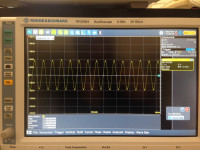
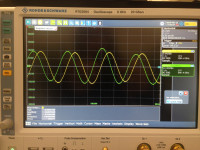
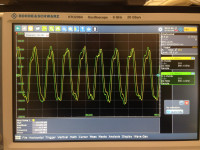
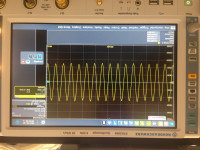
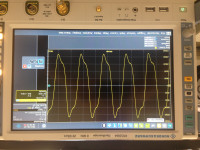
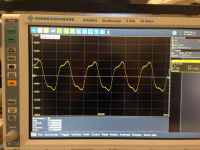
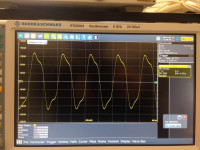
N200+daughterboard 10 MHz to 6 GHz) is not accurate, in attacched some
photos.
At 1 GHz, the shape is worst than when the carrier frequency is 3GHz.
It is not possible to measure the amplitude and frequency because, also at
3 GHz, it is not stable.
Could you help me?
Thank you in advance.
Best Regards,
Simona
Il giorno lun 17 giu 2019 alle ore 18:00 usrp-users-request@lists.ettus.com
ha scritto:
Send USRP-users mailing list submissions to
usrp-users@lists.ettus.com
To subscribe or unsubscribe via the World Wide Web, visit
http://lists.ettus.com/mailman/listinfo/usrp-users_lists.ettus.com
or, via email, send a message with subject or body 'help' to
usrp-users-request@lists.ettus.com
You can reach the person managing the list at
usrp-users-owner@lists.ettus.com
When replying, please edit your Subject line so it is more specific
than "Re: Contents of USRP-users digest..."
Today's Topics:
1. Getting interval between samples (Varban Metodiev)
2. Re: Getting interval between samples (Nick Foster)
Message: 1
Date: Mon, 17 Jun 2019 09:38:38 +0300
From: Varban Metodiev varban.metodiev@gmail.com
To: usrp-users@lists.ettus.com
Subject: [USRP-users] Getting interval between samples
Message-ID:
<
CAKA0MUh7YvcFKaHvxa1zuW62L37O0emMw2L3VzNE4S7vu2wYHg@mail.gmail.com>
Content-Type: text/plain; charset="utf-8"
Hi,
Recently I have been trying to figure out how to get the sample interval
(in nanoseconds) on my USRP b205mini device that is coming from the radio
IC. In regards with this, I would kindly ask you for assistance on the
following questions:
-
While browsing the Verilog codes, I found out that a clock of 40MHz DDR
is used for reading and writing to the AD9364 IC. When the ?USRP Sink?
block in GNU Radio is active, does it constantly poll at 40MHz? My initial
intention was to write a separate counter block in Verilog to get the
interval between the samples but if there are no stops/wait event on the
bus, can I use this as time reference?
-
On the block diagram of the b205mini, it is mentioned that the DDC and
the DUC are integrated in the FPGA. I have two questions here:
-
I couldn?t find them in the top module, so.. where is the exact location?
-
Is there some way to read the samples directly from the RF IC, before the
DDC?
- About the UHD interface ? are there any examples on how to interface my
own block with my own registers via the USB?
Thanks in advance,
Varban
Dear Sir/Madam,
I am Simona Sibio, a student in Heriot Watt University.
I am working with USRPs both on Matlab and on Gnuradio, and with both
softwares I have the same problem: the shape (generated by
N200+daughterboard 10 MHz to 6 GHz) is not accurate, in attacched some
photos.
At 1 GHz, the shape is worst than when the carrier frequency is 3GHz.
It is not possible to measure the amplitude and frequency because, also at
3 GHz, it is not stable.
Could you help me?
Thank you in advance.
Best Regards,
Simona
Il giorno lun 17 giu 2019 alle ore 18:00 <usrp-users-request@lists.ettus.com>
ha scritto:
> Send USRP-users mailing list submissions to
> usrp-users@lists.ettus.com
>
> To subscribe or unsubscribe via the World Wide Web, visit
> http://lists.ettus.com/mailman/listinfo/usrp-users_lists.ettus.com
> or, via email, send a message with subject or body 'help' to
> usrp-users-request@lists.ettus.com
>
> You can reach the person managing the list at
> usrp-users-owner@lists.ettus.com
>
> When replying, please edit your Subject line so it is more specific
> than "Re: Contents of USRP-users digest..."
>
>
> Today's Topics:
>
> 1. Getting interval between samples (Varban Metodiev)
> 2. Re: Getting interval between samples (Nick Foster)
>
>
> ----------------------------------------------------------------------
>
> Message: 1
> Date: Mon, 17 Jun 2019 09:38:38 +0300
> From: Varban Metodiev <varban.metodiev@gmail.com>
> To: usrp-users@lists.ettus.com
> Subject: [USRP-users] Getting interval between samples
> Message-ID:
> <
> CAKA0MUh7YvcFKaHvxa1zuW62L37O0emMw2L3VzNE4S7vu2wYHg@mail.gmail.com>
> Content-Type: text/plain; charset="utf-8"
>
> Hi,
>
> Recently I have been trying to figure out how to get the sample interval
> (in nanoseconds) on my USRP b205mini device that is coming from the radio
> IC. In regards with this, I would kindly ask you for assistance on the
> following questions:
>
> 1) While browsing the Verilog codes, I found out that a clock of 40MHz DDR
> is used for reading and writing to the AD9364 IC. When the ?USRP Sink?
> block in GNU Radio is active, does it constantly poll at 40MHz? My initial
> intention was to write a separate counter block in Verilog to get the
> interval between the samples but if there are no stops/wait event on the
> bus, can I use this as time reference?
>
>
> 2) On the block diagram of the b205mini, it is mentioned that the DDC and
> the DUC are integrated in the FPGA. I have two questions here:
>
> - I couldn?t find them in the top module, so.. where is the exact location?
>
> - Is there some way to read the samples directly from the RF IC, before the
> DDC?
>
>
> 3) About the UHD interface ? are there any examples on how to interface my
> own block with my own registers via the USB?
>
>
> Thanks in advance,
> Varban
>
MD
Michael Dickens
Tue, Jun 18, 2019 1:34 PM
Hi Simona - Can you please educate us as to a few items?
-
your setup: you have an N200 + some daughterboard (which one) + some spectrum analyzer (which one), connected ?somehow? -> are you doing actual wireless Tx -> Rx, or do you have a cable hooked up between the N200 & spectrum analyzer?
-
what waveform you're trying to generate, and what is the actual flowgraph you're using for GNU Radio? how are you generating the waveform in MATLAB?
-
which version of GNU Radio and UHD are you trying to use?
-
which version of MATLAB and it's UHD are you trying to use?
The above might help someone to diagnose your issue ... without it, we can make some guesses but not much in the way of specifics.
Please remember to "reply all", so that others can see your response and be able to chime in to provide help. - MLD
On Tue, Jun 18, 2019, at 8:42 AM, Simona Sibio via USRP-users wrote:
Dear Sir/Madam,
I am Simona Sibio, a student in Heriot Watt University.
I am working with USRPs both on Matlab and on Gnuradio, and with both softwares I have the same problem: the shape (generated by N200+daughterboard 10 MHz to 6 GHz) is not accurate, in attacched some photos.
At 1 GHz, the shape is worst than when the carrier frequency is 3GHz.
It is not possible to measure the amplitude and frequency because, also at 3 GHz, it is not stable.
Could you help me?
Thank you in advance.
Best Regards,
Simona
Hi Simona - Can you please educate us as to a few items?
* your setup: you have an N200 + some daughterboard (which one) + some spectrum analyzer (which one), connected ?somehow? -> are you doing actual wireless Tx -> Rx, or do you have a cable hooked up between the N200 & spectrum analyzer?
* what waveform you're trying to generate, and what is the actual flowgraph you're using for GNU Radio? how are you generating the waveform in MATLAB?
* which version of GNU Radio and UHD are you trying to use?
* which version of MATLAB and it's UHD are you trying to use?
The above might help someone to diagnose your issue ... without it, we can make some guesses but not much in the way of specifics.
Please remember to "reply all", so that others can see your response and be able to chime in to provide help. - MLD
On Tue, Jun 18, 2019, at 8:42 AM, Simona Sibio via USRP-users wrote:
> Dear Sir/Madam,
>
> I am Simona Sibio, a student in Heriot Watt University.
> I am working with USRPs both on Matlab and on Gnuradio, and with both softwares I have the same problem: the shape (generated by N200+daughterboard 10 MHz to 6 GHz) is not accurate, in attacched some photos.
> At 1 GHz, the shape is worst than when the carrier frequency is 3GHz.
> It is not possible to measure the amplitude and frequency because, also at 3 GHz, it is not stable.
> Could you help me?
>
> Thank you in advance.
>
> Best Regards,
>
> Simona
SS
Simona Sibio
Tue, Jun 18, 2019 3:39 PM
Thank you for the assistance.
I tried to change the amplitude but the amplitude and frequency are not
accurate in the oscilloscope yet.
If I lower the amplitude, the S/N is lowered then it is worst.
Best Regards,
Simona
Il giorno mar 18 giu 2019 alle ore 18:33 Nick Foster bistromath@gmail.com
ha scritto:
Waveform source amplitude is too high. Turn it down to <0.4.
On Tue, Jun 18, 2019 at 9:31 AM Simona Sibio via USRP-users <
usrp-users@lists.ettus.com> wrote:
Hi Michael,
thank you for your interest.
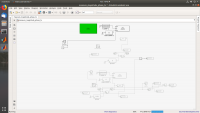
I have two N200 and each one have two daughterboard UBX-40; the
transmitters are connected by coaxial cable to an oscilloscope
(Rhode&Schwarz RTO2064) to check the waveform.
The version of UHD is 3.13.0.
I tried to send a constant signal using the flowgraph (Screenshot from
2019-06-18 14-56-57) in attachment on GNU radio Companion 3.7.13.4, and on
the oscilloscope I saw this "IMG_6586".
Also, I tried to generate a constant signal in Simulink model (16-42-17 &
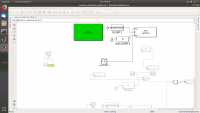
16-14-04) on Matlab R2019a but, on the oscilloscope, I saw this "IMG_6584".
I tried to send a sine signal with the Simulink model in attachment
(16-46-10) and, on the oscilloscope, I saw this "IMG_6583".
Also I tried to generate the sine signal with GNU radio (17-08-58) and I
saw this "IMG_6588".
It is possible to see how the amplitude and frequency change in every
case, I need to obtain an accurate signal because I have to measure the
amplitude and phase in a particular point in the circuit.
And in the previous email, I added that the problem increases when I
lower the carrier frequency. All these measures were taken with a carrier
frequency at 3 GHz, but if I change the fc at 1 GHz the shape is worst,
e.g. IMG_6589.
Thank you in advance.
Best Regards,
Simona
Il giorno mar 18 giu 2019 alle ore 15:34 Michael Dickens <
michael.dickens@ettus.com> ha scritto:
Hi Simona - Can you please educate us as to a few items?
-
your setup: you have an N200 + some daughterboard (which one) + some
spectrum analyzer (which one), connected ?somehow? -> are you doing actual
wireless Tx -> Rx, or do you have a cable hooked up between the N200 &
spectrum analyzer?
-
what waveform you're trying to generate, and what is the actual
flowgraph you're using for GNU Radio? how are you generating the waveform
in MATLAB?
-
which version of GNU Radio and UHD are you trying to use?
-
which version of MATLAB and it's UHD are you trying to use?
The above might help someone to diagnose your issue ... without it, we
can make some guesses but not much in the way of specifics.
Please remember to "reply all", so that others can see your response and
be able to chime in to provide help. - MLD
On Tue, Jun 18, 2019, at 8:42 AM, Simona Sibio via USRP-users wrote:
Dear Sir/Madam,
I am Simona Sibio, a student in Heriot Watt University.
I am working with USRPs both on Matlab and on Gnuradio, and with both
softwares I have the same problem: the shape (generated by
N200+daughterboard 10 MHz to 6 GHz) is not accurate, in attacched some
photos.
At 1 GHz, the shape is worst than when the carrier frequency is 3GHz.
It is not possible to measure the amplitude and frequency because, also
at 3 GHz, it is not stable.
Could you help me?
Thank you in advance.
Best Regards,
Simona
Thank you for the assistance.
I tried to change the amplitude but the amplitude and frequency are not
accurate in the oscilloscope yet.
If I lower the amplitude, the S/N is lowered then it is worst.
Best Regards,
Simona
Il giorno mar 18 giu 2019 alle ore 18:33 Nick Foster <bistromath@gmail.com>
ha scritto:
> Waveform source amplitude is too high. Turn it down to <0.4.
>
> On Tue, Jun 18, 2019 at 9:31 AM Simona Sibio via USRP-users <
> usrp-users@lists.ettus.com> wrote:
>
>> Hi Michael,
>>
>> thank you for your interest.
>>
>> I have two N200 and each one have two daughterboard UBX-40; the
>> transmitters are connected by coaxial cable to an oscilloscope
>> (Rhode&Schwarz RTO2064) to check the waveform.
>> The version of UHD is 3.13.0.
>>
>> I tried to send a constant signal using the flowgraph (Screenshot from
>> 2019-06-18 14-56-57) in attachment on GNU radio Companion 3.7.13.4, and on
>> the oscilloscope I saw this "IMG_6586".
>> Also, I tried to generate a constant signal in Simulink model (16-42-17 &
>> 16-14-04) on Matlab R2019a but, on the oscilloscope, I saw this "IMG_6584".
>>
>> I tried to send a sine signal with the Simulink model in attachment
>> (16-46-10) and, on the oscilloscope, I saw this "IMG_6583".
>> Also I tried to generate the sine signal with GNU radio (17-08-58) and I
>> saw this "IMG_6588".
>>
>> It is possible to see how the amplitude and frequency change in every
>> case, I need to obtain an accurate signal because I have to measure the
>> amplitude and phase in a particular point in the circuit.
>> And in the previous email, I added that the problem increases when I
>> lower the carrier frequency. All these measures were taken with a carrier
>> frequency at 3 GHz, but if I change the fc at 1 GHz the shape is worst,
>> e.g. IMG_6589.
>>
>> Thank you in advance.
>>
>> Best Regards,
>>
>> Simona
>>
>>
>> Il giorno mar 18 giu 2019 alle ore 15:34 Michael Dickens <
>> michael.dickens@ettus.com> ha scritto:
>>
>>> Hi Simona - Can you please educate us as to a few items?
>>>
>>> * your setup: you have an N200 + some daughterboard (which one) + some
>>> spectrum analyzer (which one), connected ?somehow? -> are you doing actual
>>> wireless Tx -> Rx, or do you have a cable hooked up between the N200 &
>>> spectrum analyzer?
>>>
>>> * what waveform you're trying to generate, and what is the actual
>>> flowgraph you're using for GNU Radio? how are you generating the waveform
>>> in MATLAB?
>>>
>>> * which version of GNU Radio and UHD are you trying to use?
>>>
>>> * which version of MATLAB and it's UHD are you trying to use?
>>>
>>> The above might help someone to diagnose your issue ... without it, we
>>> can make some guesses but not much in the way of specifics.
>>>
>>> Please remember to "reply all", so that others can see your response and
>>> be able to chime in to provide help. - MLD
>>>
>>> On Tue, Jun 18, 2019, at 8:42 AM, Simona Sibio via USRP-users wrote:
>>>
>>> Dear Sir/Madam,
>>>
>>> I am Simona Sibio, a student in Heriot Watt University.
>>> I am working with USRPs both on Matlab and on Gnuradio, and with both
>>> softwares I have the same problem: the shape (generated by
>>> N200+daughterboard 10 MHz to 6 GHz) is not accurate, in attacched some
>>> photos.
>>> At 1 GHz, the shape is worst than when the carrier frequency is 3GHz.
>>> It is not possible to measure the amplitude and frequency because, also
>>> at 3 GHz, it is not stable.
>>> Could you help me?
>>>
>>> Thank you in advance.
>>>
>>> Best Regards,
>>>
>>> Simona
>>>
>>>
>>> _______________________________________________
>> USRP-users mailing list
>> USRP-users@lists.ettus.com
>> http://lists.ettus.com/mailman/listinfo/usrp-users_lists.ettus.com
>>
>
SS
Simona Sibio
Tue, Jun 18, 2019 4:28 PM
Hi Michael,
thank you for your interest.
I have two N200 and each one have two daughterboard UBX-40; the
transmitters are connected by coaxial cable to an oscilloscope
(Rhode&Schwarz RTO2064) to check the waveform.
The version of UHD is 3.13.0.
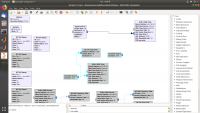
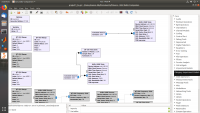
I tried to send a constant signal using the flowgraph (Screenshot from
2019-06-18 14-56-57) in attachment on GNU radio Companion 3.7.13.4, and on
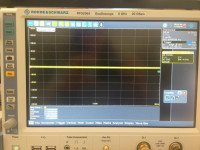
the oscilloscope I saw this "IMG_6586".
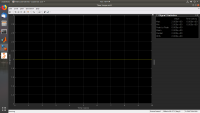
Also, I tried to generate a constant signal in Simulink model (16-42-17 &
16-14-04) on Matlab R2019a but, on the oscilloscope, I saw this "IMG_6584".
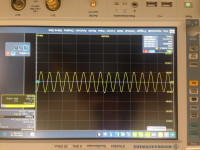
I tried to send a sine signal with the Simulink model in attachment
(16-46-10) and, on the oscilloscope, I saw this "IMG_6583".
Also I tried to generate the sine signal with GNU radio (17-08-58) and I
saw this "IMG_6588".
It is possible to see how the amplitude and frequency change in every case,
I need to obtain an accurate signal because I have to measure the amplitude
and phase in a particular point in the circuit.
And in the previous email, I added that the problem increases when I lower
the carrier frequency. All these measures were taken with a carrier
frequency at 3 GHz, but if I change the fc at 1 GHz the shape is worst,
e.g. IMG_6589.
Thank you in advance.
Best Regards,
Simona
Il giorno mar 18 giu 2019 alle ore 15:34 Michael Dickens <
michael.dickens@ettus.com> ha scritto:
Hi Simona - Can you please educate us as to a few items?
-
your setup: you have an N200 + some daughterboard (which one) + some
spectrum analyzer (which one), connected ?somehow? -> are you doing actual
wireless Tx -> Rx, or do you have a cable hooked up between the N200 &
spectrum analyzer?
-
what waveform you're trying to generate, and what is the actual
flowgraph you're using for GNU Radio? how are you generating the waveform
in MATLAB?
-
which version of GNU Radio and UHD are you trying to use?
-
which version of MATLAB and it's UHD are you trying to use?
The above might help someone to diagnose your issue ... without it, we can
make some guesses but not much in the way of specifics.
Please remember to "reply all", so that others can see your response and
be able to chime in to provide help. - MLD
On Tue, Jun 18, 2019, at 8:42 AM, Simona Sibio via USRP-users wrote:
Dear Sir/Madam,
I am Simona Sibio, a student in Heriot Watt University.
I am working with USRPs both on Matlab and on Gnuradio, and with both
softwares I have the same problem: the shape (generated by
N200+daughterboard 10 MHz to 6 GHz) is not accurate, in attacched some
photos.
At 1 GHz, the shape is worst than when the carrier frequency is 3GHz.
It is not possible to measure the amplitude and frequency because, also at
3 GHz, it is not stable.
Could you help me?
Thank you in advance.
Best Regards,
Simona
Hi Michael,
thank you for your interest.
I have two N200 and each one have two daughterboard UBX-40; the
transmitters are connected by coaxial cable to an oscilloscope
(Rhode&Schwarz RTO2064) to check the waveform.
The version of UHD is 3.13.0.
I tried to send a constant signal using the flowgraph (Screenshot from
2019-06-18 14-56-57) in attachment on GNU radio Companion 3.7.13.4, and on
the oscilloscope I saw this "IMG_6586".
Also, I tried to generate a constant signal in Simulink model (16-42-17 &
16-14-04) on Matlab R2019a but, on the oscilloscope, I saw this "IMG_6584".
I tried to send a sine signal with the Simulink model in attachment
(16-46-10) and, on the oscilloscope, I saw this "IMG_6583".
Also I tried to generate the sine signal with GNU radio (17-08-58) and I
saw this "IMG_6588".
It is possible to see how the amplitude and frequency change in every case,
I need to obtain an accurate signal because I have to measure the amplitude
and phase in a particular point in the circuit.
And in the previous email, I added that the problem increases when I lower
the carrier frequency. All these measures were taken with a carrier
frequency at 3 GHz, but if I change the fc at 1 GHz the shape is worst,
e.g. IMG_6589.
Thank you in advance.
Best Regards,
Simona
Il giorno mar 18 giu 2019 alle ore 15:34 Michael Dickens <
michael.dickens@ettus.com> ha scritto:
> Hi Simona - Can you please educate us as to a few items?
>
> * your setup: you have an N200 + some daughterboard (which one) + some
> spectrum analyzer (which one), connected ?somehow? -> are you doing actual
> wireless Tx -> Rx, or do you have a cable hooked up between the N200 &
> spectrum analyzer?
>
> * what waveform you're trying to generate, and what is the actual
> flowgraph you're using for GNU Radio? how are you generating the waveform
> in MATLAB?
>
> * which version of GNU Radio and UHD are you trying to use?
>
> * which version of MATLAB and it's UHD are you trying to use?
>
> The above might help someone to diagnose your issue ... without it, we can
> make some guesses but not much in the way of specifics.
>
> Please remember to "reply all", so that others can see your response and
> be able to chime in to provide help. - MLD
>
> On Tue, Jun 18, 2019, at 8:42 AM, Simona Sibio via USRP-users wrote:
>
> Dear Sir/Madam,
>
> I am Simona Sibio, a student in Heriot Watt University.
> I am working with USRPs both on Matlab and on Gnuradio, and with both
> softwares I have the same problem: the shape (generated by
> N200+daughterboard 10 MHz to 6 GHz) is not accurate, in attacched some
> photos.
> At 1 GHz, the shape is worst than when the carrier frequency is 3GHz.
> It is not possible to measure the amplitude and frequency because, also at
> 3 GHz, it is not stable.
> Could you help me?
>
> Thank you in advance.
>
> Best Regards,
>
> Simona
>
>
>
NF
Nick Foster
Tue, Jun 18, 2019 4:30 PM
Waveform source amplitude is too high. Turn it down to <0.4.
On Tue, Jun 18, 2019 at 9:31 AM Simona Sibio via USRP-users <
usrp-users@lists.ettus.com> wrote:
Hi Michael,
thank you for your interest.
I have two N200 and each one have two daughterboard UBX-40; the
transmitters are connected by coaxial cable to an oscilloscope
(Rhode&Schwarz RTO2064) to check the waveform.
The version of UHD is 3.13.0.
I tried to send a constant signal using the flowgraph (Screenshot from
2019-06-18 14-56-57) in attachment on GNU radio Companion 3.7.13.4, and on
the oscilloscope I saw this "IMG_6586".
Also, I tried to generate a constant signal in Simulink model (16-42-17 &
16-14-04) on Matlab R2019a but, on the oscilloscope, I saw this "IMG_6584".
I tried to send a sine signal with the Simulink model in attachment
(16-46-10) and, on the oscilloscope, I saw this "IMG_6583".
Also I tried to generate the sine signal with GNU radio (17-08-58) and I
saw this "IMG_6588".
It is possible to see how the amplitude and frequency change in every
case, I need to obtain an accurate signal because I have to measure the
amplitude and phase in a particular point in the circuit.
And in the previous email, I added that the problem increases when I lower
the carrier frequency. All these measures were taken with a carrier
frequency at 3 GHz, but if I change the fc at 1 GHz the shape is worst,
e.g. IMG_6589.
Thank you in advance.
Best Regards,
Simona
Il giorno mar 18 giu 2019 alle ore 15:34 Michael Dickens <
michael.dickens@ettus.com> ha scritto:
Hi Simona - Can you please educate us as to a few items?
-
your setup: you have an N200 + some daughterboard (which one) + some
spectrum analyzer (which one), connected ?somehow? -> are you doing actual
wireless Tx -> Rx, or do you have a cable hooked up between the N200 &
spectrum analyzer?
-
what waveform you're trying to generate, and what is the actual
flowgraph you're using for GNU Radio? how are you generating the waveform
in MATLAB?
-
which version of GNU Radio and UHD are you trying to use?
-
which version of MATLAB and it's UHD are you trying to use?
The above might help someone to diagnose your issue ... without it, we
can make some guesses but not much in the way of specifics.
Please remember to "reply all", so that others can see your response and
be able to chime in to provide help. - MLD
On Tue, Jun 18, 2019, at 8:42 AM, Simona Sibio via USRP-users wrote:
Dear Sir/Madam,
I am Simona Sibio, a student in Heriot Watt University.
I am working with USRPs both on Matlab and on Gnuradio, and with both
softwares I have the same problem: the shape (generated by
N200+daughterboard 10 MHz to 6 GHz) is not accurate, in attacched some
photos.
At 1 GHz, the shape is worst than when the carrier frequency is 3GHz.
It is not possible to measure the amplitude and frequency because, also
at 3 GHz, it is not stable.
Could you help me?
Thank you in advance.
Best Regards,
Simona
Waveform source amplitude is too high. Turn it down to <0.4.
On Tue, Jun 18, 2019 at 9:31 AM Simona Sibio via USRP-users <
usrp-users@lists.ettus.com> wrote:
> Hi Michael,
>
> thank you for your interest.
>
> I have two N200 and each one have two daughterboard UBX-40; the
> transmitters are connected by coaxial cable to an oscilloscope
> (Rhode&Schwarz RTO2064) to check the waveform.
> The version of UHD is 3.13.0.
>
> I tried to send a constant signal using the flowgraph (Screenshot from
> 2019-06-18 14-56-57) in attachment on GNU radio Companion 3.7.13.4, and on
> the oscilloscope I saw this "IMG_6586".
> Also, I tried to generate a constant signal in Simulink model (16-42-17 &
> 16-14-04) on Matlab R2019a but, on the oscilloscope, I saw this "IMG_6584".
>
> I tried to send a sine signal with the Simulink model in attachment
> (16-46-10) and, on the oscilloscope, I saw this "IMG_6583".
> Also I tried to generate the sine signal with GNU radio (17-08-58) and I
> saw this "IMG_6588".
>
> It is possible to see how the amplitude and frequency change in every
> case, I need to obtain an accurate signal because I have to measure the
> amplitude and phase in a particular point in the circuit.
> And in the previous email, I added that the problem increases when I lower
> the carrier frequency. All these measures were taken with a carrier
> frequency at 3 GHz, but if I change the fc at 1 GHz the shape is worst,
> e.g. IMG_6589.
>
> Thank you in advance.
>
> Best Regards,
>
> Simona
>
>
> Il giorno mar 18 giu 2019 alle ore 15:34 Michael Dickens <
> michael.dickens@ettus.com> ha scritto:
>
>> Hi Simona - Can you please educate us as to a few items?
>>
>> * your setup: you have an N200 + some daughterboard (which one) + some
>> spectrum analyzer (which one), connected ?somehow? -> are you doing actual
>> wireless Tx -> Rx, or do you have a cable hooked up between the N200 &
>> spectrum analyzer?
>>
>> * what waveform you're trying to generate, and what is the actual
>> flowgraph you're using for GNU Radio? how are you generating the waveform
>> in MATLAB?
>>
>> * which version of GNU Radio and UHD are you trying to use?
>>
>> * which version of MATLAB and it's UHD are you trying to use?
>>
>> The above might help someone to diagnose your issue ... without it, we
>> can make some guesses but not much in the way of specifics.
>>
>> Please remember to "reply all", so that others can see your response and
>> be able to chime in to provide help. - MLD
>>
>> On Tue, Jun 18, 2019, at 8:42 AM, Simona Sibio via USRP-users wrote:
>>
>> Dear Sir/Madam,
>>
>> I am Simona Sibio, a student in Heriot Watt University.
>> I am working with USRPs both on Matlab and on Gnuradio, and with both
>> softwares I have the same problem: the shape (generated by
>> N200+daughterboard 10 MHz to 6 GHz) is not accurate, in attacched some
>> photos.
>> At 1 GHz, the shape is worst than when the carrier frequency is 3GHz.
>> It is not possible to measure the amplitude and frequency because, also
>> at 3 GHz, it is not stable.
>> Could you help me?
>>
>> Thank you in advance.
>>
>> Best Regards,
>>
>> Simona
>>
>>
>> _______________________________________________
> USRP-users mailing list
> USRP-users@lists.ettus.com
> http://lists.ettus.com/mailman/listinfo/usrp-users_lists.ettus.com
>
NF
Nick Foster
Tue, Jun 18, 2019 5:03 PM
Turn up the transmit gain on the USRP sink. Start with ~40dB and transmit
amplitude 0.3.
Nick
On Tue, Jun 18, 2019 at 9:40 AM Simona Sibio ssibio2@gmail.com wrote:
Thank you for the assistance.
I tried to change the amplitude but the amplitude and frequency are not
accurate in the oscilloscope yet.
If I lower the amplitude, the S/N is lowered then it is worst.
Best Regards,
Simona
Il giorno mar 18 giu 2019 alle ore 18:33 Nick Foster bistromath@gmail.com
ha scritto:
Waveform source amplitude is too high. Turn it down to <0.4.
On Tue, Jun 18, 2019 at 9:31 AM Simona Sibio via USRP-users <
usrp-users@lists.ettus.com> wrote:
Hi Michael,
thank you for your interest.
I have two N200 and each one have two daughterboard UBX-40; the
transmitters are connected by coaxial cable to an oscilloscope
(Rhode&Schwarz RTO2064) to check the waveform.
The version of UHD is 3.13.0.
I tried to send a constant signal using the flowgraph (Screenshot from
2019-06-18 14-56-57) in attachment on GNU radio Companion 3.7.13.4, and on
the oscilloscope I saw this "IMG_6586".
Also, I tried to generate a constant signal in Simulink model (16-42-17
& 16-14-04) on Matlab R2019a but, on the oscilloscope, I saw this
"IMG_6584".
I tried to send a sine signal with the Simulink model in attachment
(16-46-10) and, on the oscilloscope, I saw this "IMG_6583".
Also I tried to generate the sine signal with GNU radio (17-08-58) and I
saw this "IMG_6588".
It is possible to see how the amplitude and frequency change in every
case, I need to obtain an accurate signal because I have to measure the
amplitude and phase in a particular point in the circuit.
And in the previous email, I added that the problem increases when I
lower the carrier frequency. All these measures were taken with a carrier
frequency at 3 GHz, but if I change the fc at 1 GHz the shape is worst,
e.g. IMG_6589.
Thank you in advance.
Best Regards,
Simona
Il giorno mar 18 giu 2019 alle ore 15:34 Michael Dickens <
michael.dickens@ettus.com> ha scritto:
Hi Simona - Can you please educate us as to a few items?
-
your setup: you have an N200 + some daughterboard (which one) + some
spectrum analyzer (which one), connected ?somehow? -> are you doing actual
wireless Tx -> Rx, or do you have a cable hooked up between the N200 &
spectrum analyzer?
-
what waveform you're trying to generate, and what is the actual
flowgraph you're using for GNU Radio? how are you generating the waveform
in MATLAB?
-
which version of GNU Radio and UHD are you trying to use?
-
which version of MATLAB and it's UHD are you trying to use?
The above might help someone to diagnose your issue ... without it, we
can make some guesses but not much in the way of specifics.
Please remember to "reply all", so that others can see your response
and be able to chime in to provide help. - MLD
On Tue, Jun 18, 2019, at 8:42 AM, Simona Sibio via USRP-users wrote:
Dear Sir/Madam,
I am Simona Sibio, a student in Heriot Watt University.
I am working with USRPs both on Matlab and on Gnuradio, and with both
softwares I have the same problem: the shape (generated by
N200+daughterboard 10 MHz to 6 GHz) is not accurate, in attacched some
photos.
At 1 GHz, the shape is worst than when the carrier frequency is 3GHz.
It is not possible to measure the amplitude and frequency because, also
at 3 GHz, it is not stable.
Could you help me?
Thank you in advance.
Best Regards,
Simona
Turn up the transmit gain on the USRP sink. Start with ~40dB and transmit
amplitude 0.3.
Nick
On Tue, Jun 18, 2019 at 9:40 AM Simona Sibio <ssibio2@gmail.com> wrote:
> Thank you for the assistance.
> I tried to change the amplitude but the amplitude and frequency are not
> accurate in the oscilloscope yet.
> If I lower the amplitude, the S/N is lowered then it is worst.
>
> Best Regards,
>
> Simona
>
>
> Il giorno mar 18 giu 2019 alle ore 18:33 Nick Foster <bistromath@gmail.com>
> ha scritto:
>
>> Waveform source amplitude is too high. Turn it down to <0.4.
>>
>> On Tue, Jun 18, 2019 at 9:31 AM Simona Sibio via USRP-users <
>> usrp-users@lists.ettus.com> wrote:
>>
>>> Hi Michael,
>>>
>>> thank you for your interest.
>>>
>>> I have two N200 and each one have two daughterboard UBX-40; the
>>> transmitters are connected by coaxial cable to an oscilloscope
>>> (Rhode&Schwarz RTO2064) to check the waveform.
>>> The version of UHD is 3.13.0.
>>>
>>> I tried to send a constant signal using the flowgraph (Screenshot from
>>> 2019-06-18 14-56-57) in attachment on GNU radio Companion 3.7.13.4, and on
>>> the oscilloscope I saw this "IMG_6586".
>>> Also, I tried to generate a constant signal in Simulink model (16-42-17
>>> & 16-14-04) on Matlab R2019a but, on the oscilloscope, I saw this
>>> "IMG_6584".
>>>
>>> I tried to send a sine signal with the Simulink model in attachment
>>> (16-46-10) and, on the oscilloscope, I saw this "IMG_6583".
>>> Also I tried to generate the sine signal with GNU radio (17-08-58) and I
>>> saw this "IMG_6588".
>>>
>>> It is possible to see how the amplitude and frequency change in every
>>> case, I need to obtain an accurate signal because I have to measure the
>>> amplitude and phase in a particular point in the circuit.
>>> And in the previous email, I added that the problem increases when I
>>> lower the carrier frequency. All these measures were taken with a carrier
>>> frequency at 3 GHz, but if I change the fc at 1 GHz the shape is worst,
>>> e.g. IMG_6589.
>>>
>>> Thank you in advance.
>>>
>>> Best Regards,
>>>
>>> Simona
>>>
>>>
>>> Il giorno mar 18 giu 2019 alle ore 15:34 Michael Dickens <
>>> michael.dickens@ettus.com> ha scritto:
>>>
>>>> Hi Simona - Can you please educate us as to a few items?
>>>>
>>>> * your setup: you have an N200 + some daughterboard (which one) + some
>>>> spectrum analyzer (which one), connected ?somehow? -> are you doing actual
>>>> wireless Tx -> Rx, or do you have a cable hooked up between the N200 &
>>>> spectrum analyzer?
>>>>
>>>> * what waveform you're trying to generate, and what is the actual
>>>> flowgraph you're using for GNU Radio? how are you generating the waveform
>>>> in MATLAB?
>>>>
>>>> * which version of GNU Radio and UHD are you trying to use?
>>>>
>>>> * which version of MATLAB and it's UHD are you trying to use?
>>>>
>>>> The above might help someone to diagnose your issue ... without it, we
>>>> can make some guesses but not much in the way of specifics.
>>>>
>>>> Please remember to "reply all", so that others can see your response
>>>> and be able to chime in to provide help. - MLD
>>>>
>>>> On Tue, Jun 18, 2019, at 8:42 AM, Simona Sibio via USRP-users wrote:
>>>>
>>>> Dear Sir/Madam,
>>>>
>>>> I am Simona Sibio, a student in Heriot Watt University.
>>>> I am working with USRPs both on Matlab and on Gnuradio, and with both
>>>> softwares I have the same problem: the shape (generated by
>>>> N200+daughterboard 10 MHz to 6 GHz) is not accurate, in attacched some
>>>> photos.
>>>> At 1 GHz, the shape is worst than when the carrier frequency is 3GHz.
>>>> It is not possible to measure the amplitude and frequency because, also
>>>> at 3 GHz, it is not stable.
>>>> Could you help me?
>>>>
>>>> Thank you in advance.
>>>>
>>>> Best Regards,
>>>>
>>>> Simona
>>>>
>>>>
>>>> _______________________________________________
>>> USRP-users mailing list
>>> USRP-users@lists.ettus.com
>>> http://lists.ettus.com/mailman/listinfo/usrp-users_lists.ettus.com
>>>
>>
SS
Simona Sibio
Wed, Jun 19, 2019 10:02 AM
Thank you very much.
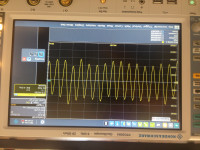
I tried to send a signal with this features, but the result is the same
(IMG_6590).
I tried with every amplitude and every gain (Screenshot from 2019).
Before, I thought that it was a problem of reference signal and I changed
it but the situation is not changed.
Thank you in advance for your help.
Best Regards,
Simona
Il giorno mar 18 giu 2019 alle ore 18:06 Nick Foster bistromath@gmail.com
ha scritto:
Turn up the transmit gain on the USRP sink. Start with ~40dB and transmit
amplitude 0.3.
Nick
On Tue, Jun 18, 2019 at 9:40 AM Simona Sibio ssibio2@gmail.com wrote:
Thank you for the assistance.
I tried to change the amplitude but the amplitude and frequency are not
accurate in the oscilloscope yet.
If I lower the amplitude, the S/N is lowered then it is worst.
Best Regards,
Simona
Il giorno mar 18 giu 2019 alle ore 18:33 Nick Foster <
bistromath@gmail.com> ha scritto:
Waveform source amplitude is too high. Turn it down to <0.4.
On Tue, Jun 18, 2019 at 9:31 AM Simona Sibio via USRP-users <
usrp-users@lists.ettus.com> wrote:
Hi Michael,
thank you for your interest.
I have two N200 and each one have two daughterboard UBX-40; the
transmitters are connected by coaxial cable to an oscilloscope
(Rhode&Schwarz RTO2064) to check the waveform.
The version of UHD is 3.13.0.
I tried to send a constant signal using the flowgraph (Screenshot from
2019-06-18 14-56-57) in attachment on GNU radio Companion 3.7.13.4, and on
the oscilloscope I saw this "IMG_6586".
Also, I tried to generate a constant signal in Simulink model (16-42-17
& 16-14-04) on Matlab R2019a but, on the oscilloscope, I saw this
"IMG_6584".
I tried to send a sine signal with the Simulink model in attachment
(16-46-10) and, on the oscilloscope, I saw this "IMG_6583".
Also I tried to generate the sine signal with GNU radio (17-08-58) and
I saw this "IMG_6588".
It is possible to see how the amplitude and frequency change in every
case, I need to obtain an accurate signal because I have to measure the
amplitude and phase in a particular point in the circuit.
And in the previous email, I added that the problem increases when I
lower the carrier frequency. All these measures were taken with a carrier
frequency at 3 GHz, but if I change the fc at 1 GHz the shape is worst,
e.g. IMG_6589.
Thank you in advance.
Best Regards,
Simona
Il giorno mar 18 giu 2019 alle ore 15:34 Michael Dickens <
michael.dickens@ettus.com> ha scritto:
Hi Simona - Can you please educate us as to a few items?
-
your setup: you have an N200 + some daughterboard (which one) + some
spectrum analyzer (which one), connected ?somehow? -> are you doing actual
wireless Tx -> Rx, or do you have a cable hooked up between the N200 &
spectrum analyzer?
-
what waveform you're trying to generate, and what is the actual
flowgraph you're using for GNU Radio? how are you generating the waveform
in MATLAB?
-
which version of GNU Radio and UHD are you trying to use?
-
which version of MATLAB and it's UHD are you trying to use?
The above might help someone to diagnose your issue ... without it, we
can make some guesses but not much in the way of specifics.
Please remember to "reply all", so that others can see your response
and be able to chime in to provide help. - MLD
On Tue, Jun 18, 2019, at 8:42 AM, Simona Sibio via USRP-users wrote:
Dear Sir/Madam,
I am Simona Sibio, a student in Heriot Watt University.
I am working with USRPs both on Matlab and on Gnuradio, and with both
softwares I have the same problem: the shape (generated by
N200+daughterboard 10 MHz to 6 GHz) is not accurate, in attacched some
photos.
At 1 GHz, the shape is worst than when the carrier frequency is 3GHz.
It is not possible to measure the amplitude and frequency because,
also at 3 GHz, it is not stable.
Could you help me?
Thank you in advance.
Best Regards,
Simona
Thank you very much.
I tried to send a signal with this features, but the result is the same
(IMG_6590).
I tried with every amplitude and every gain (Screenshot from 2019).
Before, I thought that it was a problem of reference signal and I changed
it but the situation is not changed.
Thank you in advance for your help.
Best Regards,
Simona
Il giorno mar 18 giu 2019 alle ore 18:06 Nick Foster <bistromath@gmail.com>
ha scritto:
> Turn up the transmit gain on the USRP sink. Start with ~40dB and transmit
> amplitude 0.3.
>
> Nick
>
> On Tue, Jun 18, 2019 at 9:40 AM Simona Sibio <ssibio2@gmail.com> wrote:
>
>> Thank you for the assistance.
>> I tried to change the amplitude but the amplitude and frequency are not
>> accurate in the oscilloscope yet.
>> If I lower the amplitude, the S/N is lowered then it is worst.
>>
>> Best Regards,
>>
>> Simona
>>
>>
>> Il giorno mar 18 giu 2019 alle ore 18:33 Nick Foster <
>> bistromath@gmail.com> ha scritto:
>>
>>> Waveform source amplitude is too high. Turn it down to <0.4.
>>>
>>> On Tue, Jun 18, 2019 at 9:31 AM Simona Sibio via USRP-users <
>>> usrp-users@lists.ettus.com> wrote:
>>>
>>>> Hi Michael,
>>>>
>>>> thank you for your interest.
>>>>
>>>> I have two N200 and each one have two daughterboard UBX-40; the
>>>> transmitters are connected by coaxial cable to an oscilloscope
>>>> (Rhode&Schwarz RTO2064) to check the waveform.
>>>> The version of UHD is 3.13.0.
>>>>
>>>> I tried to send a constant signal using the flowgraph (Screenshot from
>>>> 2019-06-18 14-56-57) in attachment on GNU radio Companion 3.7.13.4, and on
>>>> the oscilloscope I saw this "IMG_6586".
>>>> Also, I tried to generate a constant signal in Simulink model (16-42-17
>>>> & 16-14-04) on Matlab R2019a but, on the oscilloscope, I saw this
>>>> "IMG_6584".
>>>>
>>>> I tried to send a sine signal with the Simulink model in attachment
>>>> (16-46-10) and, on the oscilloscope, I saw this "IMG_6583".
>>>> Also I tried to generate the sine signal with GNU radio (17-08-58) and
>>>> I saw this "IMG_6588".
>>>>
>>>> It is possible to see how the amplitude and frequency change in every
>>>> case, I need to obtain an accurate signal because I have to measure the
>>>> amplitude and phase in a particular point in the circuit.
>>>> And in the previous email, I added that the problem increases when I
>>>> lower the carrier frequency. All these measures were taken with a carrier
>>>> frequency at 3 GHz, but if I change the fc at 1 GHz the shape is worst,
>>>> e.g. IMG_6589.
>>>>
>>>> Thank you in advance.
>>>>
>>>> Best Regards,
>>>>
>>>> Simona
>>>>
>>>>
>>>> Il giorno mar 18 giu 2019 alle ore 15:34 Michael Dickens <
>>>> michael.dickens@ettus.com> ha scritto:
>>>>
>>>>> Hi Simona - Can you please educate us as to a few items?
>>>>>
>>>>> * your setup: you have an N200 + some daughterboard (which one) + some
>>>>> spectrum analyzer (which one), connected ?somehow? -> are you doing actual
>>>>> wireless Tx -> Rx, or do you have a cable hooked up between the N200 &
>>>>> spectrum analyzer?
>>>>>
>>>>> * what waveform you're trying to generate, and what is the actual
>>>>> flowgraph you're using for GNU Radio? how are you generating the waveform
>>>>> in MATLAB?
>>>>>
>>>>> * which version of GNU Radio and UHD are you trying to use?
>>>>>
>>>>> * which version of MATLAB and it's UHD are you trying to use?
>>>>>
>>>>> The above might help someone to diagnose your issue ... without it, we
>>>>> can make some guesses but not much in the way of specifics.
>>>>>
>>>>> Please remember to "reply all", so that others can see your response
>>>>> and be able to chime in to provide help. - MLD
>>>>>
>>>>> On Tue, Jun 18, 2019, at 8:42 AM, Simona Sibio via USRP-users wrote:
>>>>>
>>>>> Dear Sir/Madam,
>>>>>
>>>>> I am Simona Sibio, a student in Heriot Watt University.
>>>>> I am working with USRPs both on Matlab and on Gnuradio, and with both
>>>>> softwares I have the same problem: the shape (generated by
>>>>> N200+daughterboard 10 MHz to 6 GHz) is not accurate, in attacched some
>>>>> photos.
>>>>> At 1 GHz, the shape is worst than when the carrier frequency is 3GHz.
>>>>> It is not possible to measure the amplitude and frequency because,
>>>>> also at 3 GHz, it is not stable.
>>>>> Could you help me?
>>>>>
>>>>> Thank you in advance.
>>>>>
>>>>> Best Regards,
>>>>>
>>>>> Simona
>>>>>
>>>>>
>>>>> _______________________________________________
>>>> USRP-users mailing list
>>>> USRP-users@lists.ettus.com
>>>> http://lists.ettus.com/mailman/listinfo/usrp-users_lists.ettus.com
>>>>
>>>